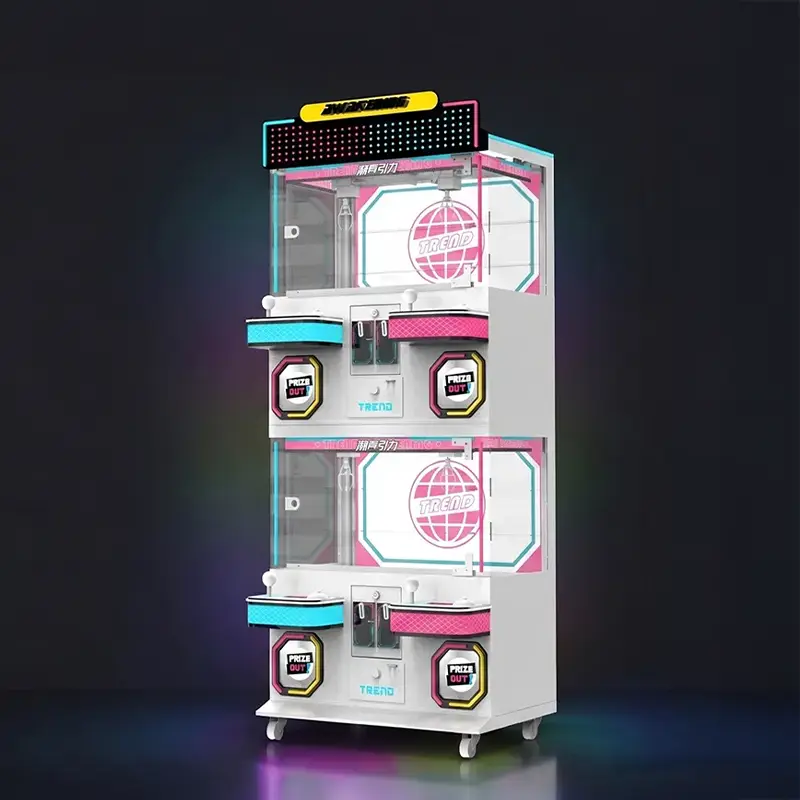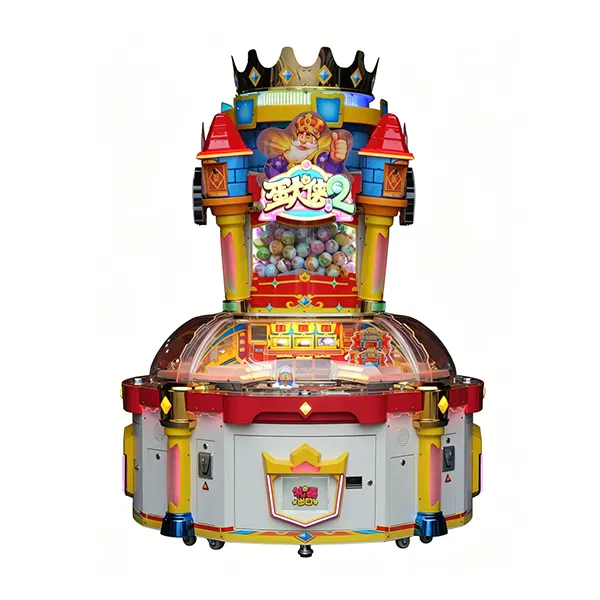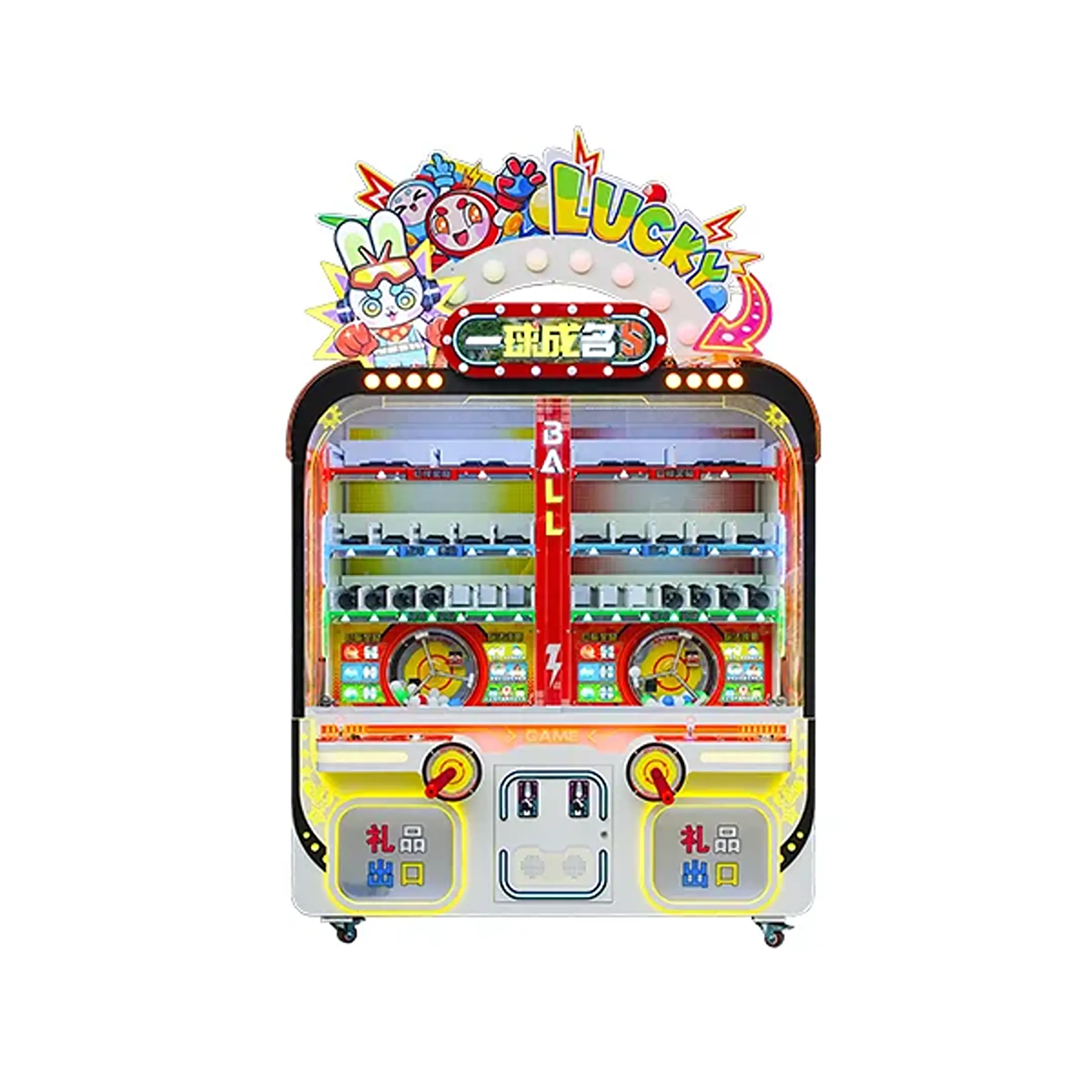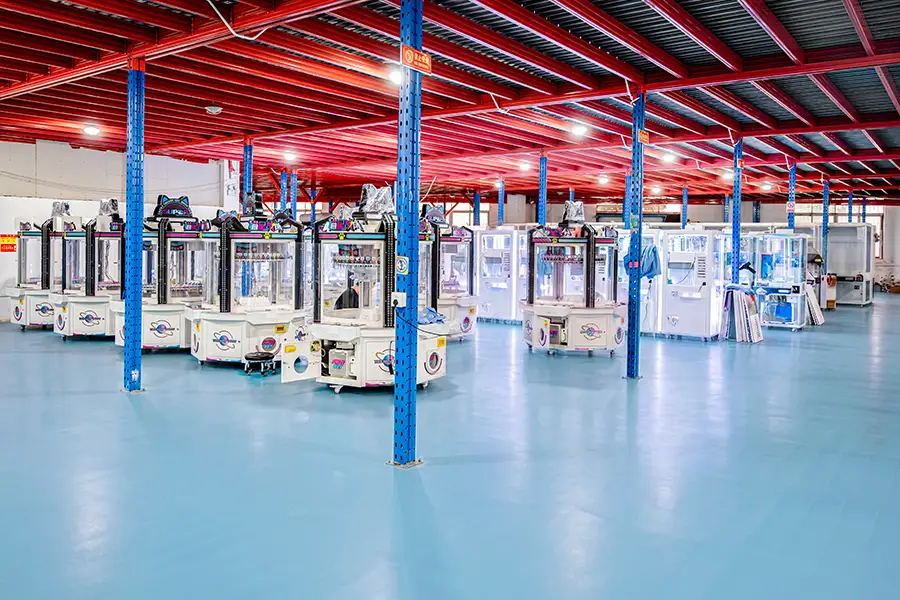
에이 발톱 기계 consists of several main components, including the cabinet, 클로 어셈블리, 드라이브 모터, control board, 전원 공급 장치, and player controls. Each part has a specific function, from moving the claw to controlling grip strength and prize retrieval.
These components work together throughout each game cycle. Their materials, construction, and performance affect machine operation, 유지, and service life. Understanding how they work helps buyers evaluate machine specifications and compare manufacturers.
What Are the Main Structural Components of a Claw Machine?
The structure is the frame everything else bolts onto, from the glass panels to the prize door.
The main parts of a claw machine are the cabinet, the claw assembly, the drive motors, the control board, the power supply, the player controls, and the prize compartment. A crane is the industry name for the same machine, so the main parts match exactly: cabinet, 클로 어셈블리, 모터, 통제 수단, and prize storage.
For a wider tour of the machine families these parts appear in, see our article on 클로 머신이란?? 유형, 구성요소, 용도, 및 구매 고려 사항.
Cabinet and Enclosure
The cabinet forms the outer structure and influences both the machine’s appearance and overall durability. Commercial builds favor steel frames wrapped in printed panels, because the frame absorbs the knocks of a busy venue while the panels carry the branding. Cabinet depth also matters, since it must hold the prize field deep enough for the claw to travel and drop cleanly.
Transparent Display Panels
Tempered glass or clear acrylic forms the viewing windows on the front and sides. Tempered glass offers good scratch and impact resistance, making it a common choice for commercial machines, while acrylic is used in some lighter builds to reduce cost and weight. Clean panel edges and tight seals keep dust out of the prize field and keep the play surface looking new.
Prize Compartment and Retrieval Door
The prize compartment is the lower chamber where dropped prizes collect, and the retrieval door is the player-facing opening with a push flap.
A well-shaped compartment guides prizes toward the door instead of letting them pile at the back, which directly affects how often staff must rearrange the field. The door flap must close firmly so hands stay out and prizes stay in.
Internal Support Frame
Inside the shell, a support frame carries the claw rail assembly, the wiring channels, and the electronics shelf. This internal structure keeps the claw path stable, as even slight frame movement can affect the claw’s positioning and travel accuracy.
To understand how these parts are shaped and fitted during production, read our guide on 클로 기계는 어떻게 만들어지나요?? 제조 공정 설명.
How Does the Claw Mechanism Work?

Three motors and a hoist cable turn a button press into a controlled grip.
Claw Assembly and Grip Structure
The claw assembly is the three-prong grabber that players watch, and its grip structure decides how securely it holds a prize. Each prong is a metal arm linked to a central hub, and the hub closes the prongs with controlled force. Commercial claws use balanced spring pressure or powered closing so the grip feels firm without crushing boxed prizes.
Motors and Movement Mechanism
Compact electric motors control the claw’s horizontal movement and vertical lifting operation. One motor travels the claw along the front-to-back axis, another handles left-to-right, and a third winds the lifting cable. Stepper and geared DC motors are the common choices, because they hold position reliably through thousands of game cycles a month.
X-Axis and Y-Axis Movement
The two travel axes work like a small crane overhead. The X-axis motor slides the carriage sideways while the Y-axis motor moves it forward and back, and the claw hangs from the carriage on the lift cable. When a player stops the joystick, the motors hold position so the aim does not drift before the drop.
Cable and Lifting System
The lift cable runs over a pulley at the top of the frame and connects to the claw hub. Winding the cable raises the claw, and paying it out lowers the claw onto the prize. Cable quality is a real maintenance topic, because a frayed cable changes the drop point and eventually strands a prize mid-field.
Which Electronic Components Control a Claw Machine?
A small set of electronics turns the mechanical frame into a tunable game.
Main Control Board
The main control board manages the machine’s electronic functions and gameplay settings. It reads the joystick and buttons, drives the motors, times the grip, and runs the game modes the operator selects.
On commercial boards, 그립 강도, move speed, drop timing, and win behavior are all settings, which is what makes one cabinet adaptable to different prize sizes.
Power Supply Unit
The power supply converts venue electricity into the stable low-voltage feeds the board, 모터, and lights require. Commercial machines ship configured for the destination market, so the same cabinet serves 110V and 220V regions with the right unit fitted. A stable supply protects the board and keeps claw force consistent from the first play of the day to the last.
Sensors and Position Detection
Sensors report what the mechanics are doing. Limit switches and encoders tell the board where the carriage sits on each axis, and prize-door sensors detect when a dropped prize actually reaches the chute. Accurate position detection allows the machine to reset correctly between plays and maintain consistent claw positioning.
조종간, 버튼, and Player Interface
The joystick and buttons are the player-facing end of the control chain. Commercial panels use industrial-grade switches rated for heavy use, because the control panel takes more physical abuse than any other part of the machine. The interface also carries the start button, the credit display, and any service switches the operator needs behind the door.
How Do the Lighting and Sound Systems Improve Gameplay?
Lights and sound make the machine visible from across the venue and alive at the glass.
LED Lighting Components
LED strips and modules outline the cabinet, light the prize field, and flash on wins. They draw little power and run cool, which keeps them dependable for daily operation.
Lighting programs are usually set on the control board, so operators can match the light show to the venue without new hardware.
Speakers and Audio Modules
A compact audio module plays startup tones, movement sounds, and win music. Sound adds pacing to the game, because players respond to the audio cues that mark each stage of a claw cycle. Volume and track selection sit behind the service menu, keeping the tuning job with the operator.
Display Screens and Interactive Indicators
Larger cabinets add screens for animations, credit counts, and jackpot messaging. Screens give operators a place to run promotions and prize highlights without reprinting panels.
On simpler machines, indicator lamps carry the same signals, and both approaches connect back to the same control board.
Source Claw Machines Built on Serviceable Components
How Do the Main Components Work Together During a Game?
One credit runs a fixed sequence, and every component has a role in it.
A claw machine works by reading player input, moving the claw over the target, lowering it, gripping with a set force, and releasing the prize into the chute. The sequence runs the same way on every cabinet, whether the machine is a countertop mini or an island-shaped multiplayer unit.
Player Input and Control Signal Processing
The cycle starts when a credit is accepted and the start button is pressed. The control board powers the joystick axes and samples their position, translating each movement into motor targets. From this point the player is steering the carriage, and the board is simply following.
Claw Movement and Prize Gripping
Once the aim is set, the board runs the drop sequence. The cable pays out, the claw reaches the prize, and the grip closes with the force the settings define. Motors hold the carriage steady through the lift so the claw carries the prize on the path the player chose.
Prize Release and Retrieval
The claw opens because the control board releases it at the point the game logic chooses, usually over the prize chute or after the grip timer ends. The prize drops into the compartment, the door sensor confirms it arrived, and the win music plays. Players then lift the prize out through the retrieval flap.
Game Reset and Next-Player Preparation
After the cycle, the board returns the carriage to the home position and resets the lights to attract mode. The credit display waits for the next payment, and the sensors confirm the field is clear. A clean reset is the sign of well-matched sensors and motors, and it is easy to check on any showroom machine.
What Should Buyers Check When Evaluating Claw Machine Components?
Components decide uptime, so they deserve the same scrutiny as the price.
| Component | What It Does | Buyer Check |
|---|---|---|
| 클로 조립 | Grips and lifts the prize | Grip strength and jaw alignment |
| Drive motors | Move the claw on both axes | Smooth travel without stalling |
| Main control board | Runs game logic and settings | Documented settings and modes |
| Power supply | Feeds stable voltage to all parts | Rated for destination voltage |
| 센서 | Detect claw position and prize drop | Consistent reset between plays |
Component Materials and Construction
Materials show up in small details worth checking in person or on video. Steel frame corners, 강화 유리 패널, metal claw prongs, and solid rail carriages all separate commercial builds from light-duty ones. Finish quality on the panels and door is a fair signal of the care behind the parts nobody sees.
Motor and Claw Performance
Ask for a demonstration of the claw doing real work. Smooth travel without stalling, a steady lift under load, and a grip that releases cleanly at the chute all point to motors and claws sized correctly for the cabinet. Where that is not possible on site, a factory video against a live machine is a reasonable substitute.
Electrical Safety and Wiring Quality
Wiring should be routed in channels, labeled, and secured away from moving parts. Boards and supplies should carry recognized safety certification appropriate to the destination market, tested against the practices of organizations such as UL. Clean wiring is also faster to service, which matters over a machine’s whole working life.
Component Replacement and Spare Parts Availability
Components should be replaceable one by one, from a claw assembly to a single sensor. Replacement parts come from the machine manufacturer, matched by part number, and a starter stock of wear parts keeps a venue running while replacements ship.
When a machine does misbehave in service, see our article on 일반적인 아케이드 기계 문제 및 해결 방법. It separates the faults that stay on site from the ones that belong to the factory.
Frequently Asked Questions About Claw Machine Components
What are the parts of a claw machine?
The main parts of a claw machine are the cabinet, the claw assembly, the drive motors, the control board, the power supply, the player controls, and the prize compartment.
What are the main parts of a crane?
A crane is the industry name for the same machine, so the main parts match exactly: cabinet, 클로 어셈블리, 모터, 통제 수단, and prize storage.
How do claw machines really work?
A claw machine works by reading player input, moving the claw over the target, lowering it, gripping with a set force, and releasing the prize into the chute.
Why do claw machines let go?
The claw opens because the control board releases it at the point the game logic chooses, usually over the prize chute or after the grip timer ends.
Where can I find replacement parts for my vending machine?
Replacement parts come from the machine manufacturer, matched by part number, and a starter stock of wear parts keeps a venue running while replacements ship.
What do you call a claw machine?
Different markets call the same cabinet a claw machine, a crane game, or a UFO catcher.
Conclusion
Every claw machine is a coordinated system. The cabinet holds the field, motors and cables move the claw, and the control board runs the game while lights and sound pull players toward the glass. The quality of each part shows up later as uptime, service visits, and how consistently the machine plays.
Buyers who read a machine as a parts list quote it more accurately and service it more cheaply. Ask what stands behind the glass, verify the components on a live machine, and confirm that spare parts are matched and stocked before the order is signed.
To review components on a live machine range, talk to the TKY Amusement team and request the specification sheets behind each cabinet.