Strategic claw machine prize ideas are the most direct lever for lifting stagnant play rates and protecting cabinet margins. Without aligning your merchandise with claw physics and local demographics, foot traffic stalls and daily revenue caps out no matter how many cabinets you add.
This analysis benchmarks inventory selection strategies against industry standard metrics. We evaluate specific physical dimensions, like the 85-to-140-gram weight sweet spot, and tiered inventory structures to help you secure a highly profitable, self-sustaining arcade footprint.
What Makes a Good Claw Machine Prize?
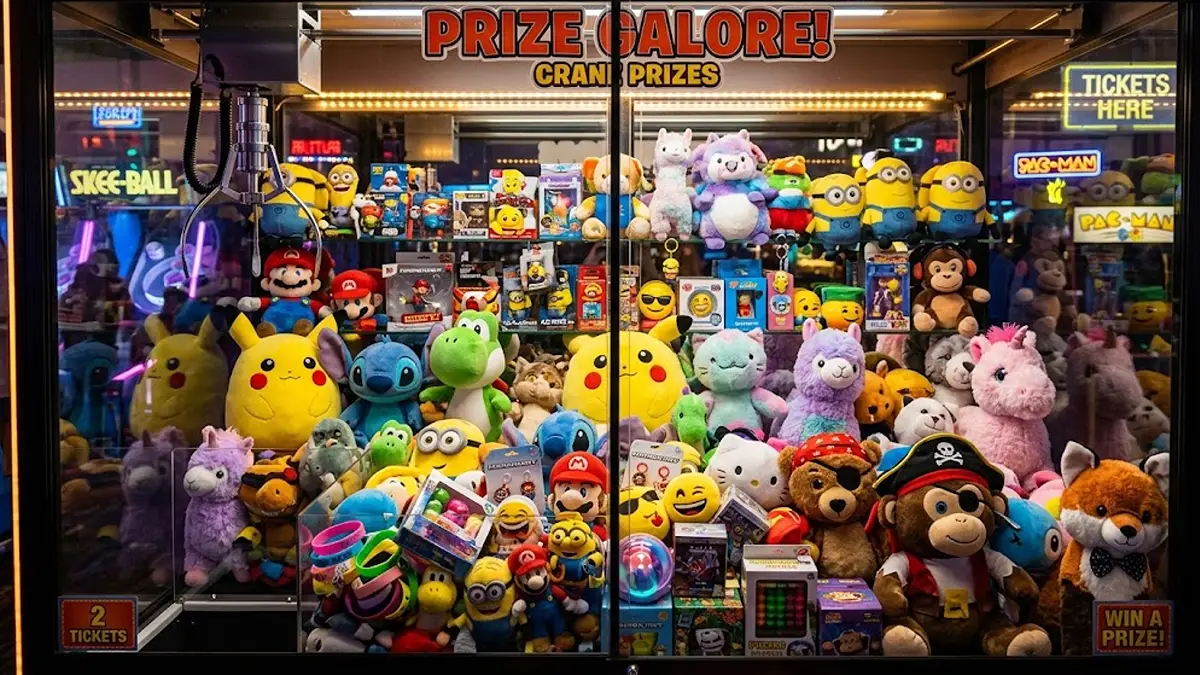
What makes a good claw machine prize? Success requires balancing grabbable physical geometry, high perceived value, and a tiered inventory strategy that drives player volume while protecting your bottom line.
Physical Attributes and Grabbability
A crane machine is only as profitable as its physics allow. Smooth spheres or heavy items drive player frustration and create dead play zones. Operators must audit the physical dimensions and weight of their stock against the claw’s mechanical capabilities.
- Grabbable Shape: Irregular shapes with distinct grab points like ears, loops, or limbs allow the claw to secure a firm, physical grip.
- Target Weight: Optimal item weight ranges from 18 kepada 42 grams for mini setups, dan 85 kepada 140 grams for standard mid-tier machines.
- Chute Clearance: Prize dimensions must fit the claw’s maximum opening width and the exit chute to prevent jams.
High Perceived Value and Visual Appeal
Impulse plays drive the claw machine economy. If players do not immediately perceive a prize as highly desirable, they will walk past the cabinet without tapping their play cards.
- Visual Draw: Bright colors and recognizable pop-culture or gaming themes draw immediate attention from passersby.
- Collector Appeal: Licensed merchandise and blind-box collectibles encourage repeat attempts through collector instincts.
- Value Perception: Prizes must look highly desirable and worth significantly more than the cost of a single play to justify the risk of losing.
Tiered Prize Mix Strategy
A single-prize strategy limits player demographics. Successful operators deploy a structured, tiered inventory mix to satisfy casual players, serious spenders, and families simultaneously. For the full cost-to-appeal calibration logic, see our guide to building a claw machine prize mix.
- Low-Cost Fillers: Budget items build player confidence by providing frequent, easy wins.
- Mid-Tier Core: Medium plush and collectibles form the core volume of the machine, balancing operator cost with player satisfaction.
- High-Value Anchors: Premium items act as visual magnets, driving sustained interest and multiple consecutive plays.
Popular Claw Machine Prize Types for Different Players
How do you keep a claw machine profitable when players walk past without a second glance? Aligning your cabinet with popular claw machine prize types designed for specific player profiles dictates your entire play rate.
Matching machine prizes to local player demographics balances grab metrics and wholesale costs to maximize repeat play volume.
| Player Segment | High-Performing Prize Types | Operational Benefit |
|---|---|---|
| Young Children & Families | Mini plush, cartoon keychains, novelty toys | High visibility, easy grip, low cost per win |
| Teens & Young Adults | Anime figures, acrylic charms, tech gadgets | Trend-driven, high social sharing potential |
| Collectors | Limited IP, mystery boxes, branded figures | Scarcity drives high repeat play sessions |
Inventory must be segmented by who actually walks through the door; a mismatch here empties cash boxes fast. The table above summarizes the core mapping between each age group and the categories that trigger quick impulse plays.
Top Performing Prize Categories
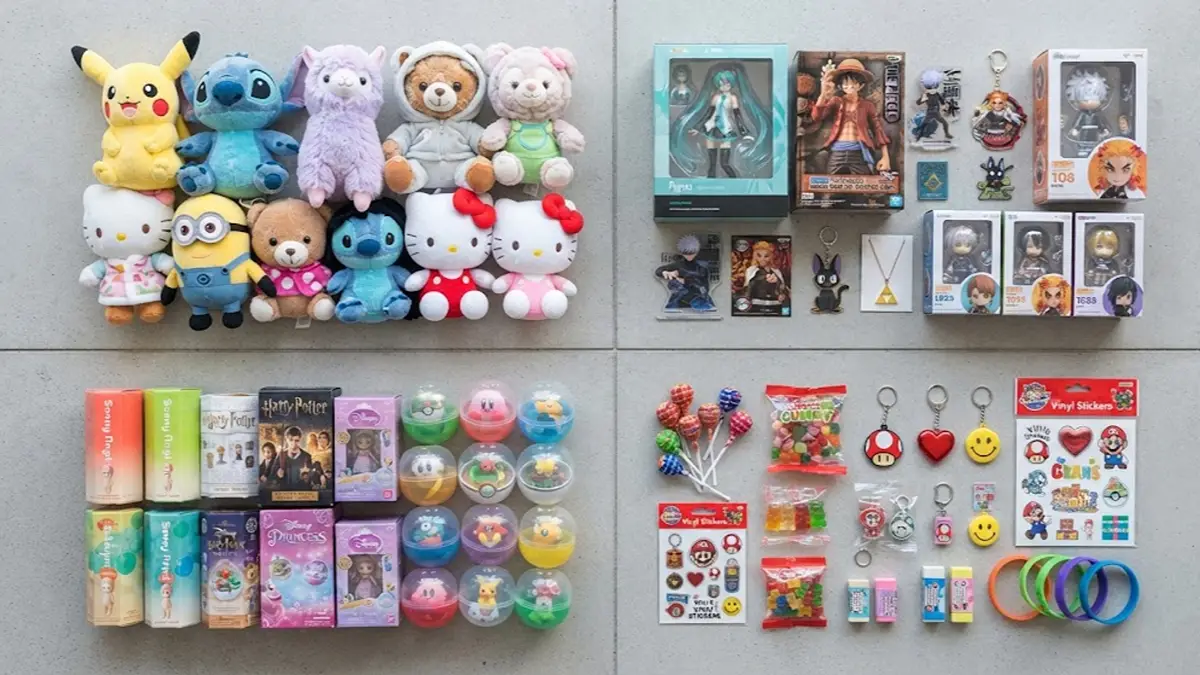
Certain prize formats consistently yield higher play counts because they offer a reliable mix of high perceived value and friendly claw physics.
- Plush Toys: The most reliable category due to universal emotional appeal, strong visual presence, and forgiving physical profiles that suit standard claw mechanisms.
- Licensed IP and Anime Collectibles: Official branding creates instant recognition and a sense of urgency among fandom-driven players.
- Blind-Box and Capsule Items: These products leverage curiosity and the drive to complete sets, prompting players to make consecutive attempts.
- Low-Cost Fillers: Candy, rantai kunci, and stickers keep merchandising rich and provide accessible wins for casual players.
Practical Selection by Venue Type
The environment hosting your machine dictates your pricing per play and target margins. Tailor the prize mix to match the local atmosphere.
- Pusat Hiburan Keluarga: Stock small plush, cartoon-themed items, and sweet treats that appeal across generations.
- Arcades and Teen-Heavy Venues: Benefit from heavy rotation of licensed gaming merchandise, kotak buta, and fashion accessories.
- Adult-Oriented Environments: Nightlife and office spots return more when stocked with practical, high-perceived-value electronics and premium items.

How Prize Size, Berat badan, and Shape Affect Gameplay
Calibrating a claw machine requires matching the physical dimensions, weight, and geometry of the prize to the claw’s mechanical limits to secure repeatable, profitable win rates.
Amusement operators frequently struggle with erratic payout ratios because they fail to calculate how prize size, weight, and shape affect gameplay and claw physics. When merchandise fails to align with claw configurations, the physical mechanics of the lift cycle break down, resulting in broken payout structures, high slip rates, or mechanical damage.
Physical Size Limits and Target Dimensions
Oversized prizes generate high leverage and torque against the claw’s gripping points. This physical restriction forces the item to drag, scrape, or bridge across prize bed gaps instead of lifting cleanly. To maintain consistent payout targets, operators must match the maximum open span of the claw to the width of the target inventory. For head-to-chute ratios in detail, our claw machine plush size guide covers the full matching methodology.
- Standard Crane Baseline: Mid-tier setups perform optimally with 5 to 11-inch plush toys.
- Size-Based Success Rates: In typical route tests, medium items between 8 dan 10 inches win far more reliably under identical settings, while items larger than 12 inches see markedly lower success.
- Mini Claw Targets: Compact setups require 2 to 4-inch plush or 40 kepada 50 mm capsules, keeping the total width under 2.75 inches to clear the bin lip reliably.
- Giant Size Exclusions: Plush exceeding 16 inches overload standard claw motors and belong exclusively in specialized hanging-loop or cut-to-win cabinets.
Weight Parameters and Claw Gripping Force
Weight serves as a direct driver of game difficulty. If the claw’s coil lacks the necessary voltage to sustain lift torque, heavier items will slip out of the fingers early or stall the motor entirely during the ascent.
- Mid-Tier Crane Sweet Spot: Ideal weights range between 85 dan 140 gram; items up to roughly 200 grams remain workable on standard machines configured for medium prizes.
- Mini Claw Constraints: Compact claws require strict weight control between 18 dan 42 grams to prevent high-speed slippage or motor burnout.
- Mass Distribution Risks: Heavy heads, internal battery packs, or weighted feet generate rotational torque that spins the prize out of the claw.
- Operator Settings: Technical configurations must scale grip strength and hold times, typically running 25-40% grip for small items and 40-60% grip for medium items.
Shape Geometry and Claw Contact Mechanics
The geometric contour of a prize determines the friction coefficient between the claw tips and the target. Without distinct physical edges or textured materials, claw fingers cannot establish the mechanical brace needed to transport the object to the prize chute.
- Symmetrical Advantage: Dalam amalan, cubes, cylinders, and textured spheres tend to be more winnable than irregular items under identical machine settings.
- Required Grab Points: Claws need clear grab points such as edges, corners, loops, or protruding soft limbs to lock the prize in place.
- Slippage Geometries: Smooth, glossy, or perfectly round objects easily slide out of the metal fingers, while wide flat boxes block the claw from wrapping underneath.
- Play Area Dead Zones: Long limbs or dangling accessories tangle with adjacent prizes, pinning items to the bed and stopping clean wins.
Combined Profiles and Bed Management Strategies
Maximizing player engagement while securing target margins requires strategic bed management, since mixing incompatible inventory profiles in a single cabinet breaks the payout logic.
- The Win-Friendly Mix: Combine a single size class, consistent density, and prominent grab points to allow stable claw calibration.
- Mixing Pitfalls: Blending 3-inch minis with 10-inch plush in the same machine buries small items, blocks the chute, and creates highly erratic win patterns.
- Bed Depth Standard: Keep the prize bed 2 kepada 3 layers deep to prevent severe wedging while maintaining a dense presentation.
- Empirical Optimization: Testing drop-off behavior, monitoring claw stalls, and watching for chute collisions keeps the machine within its planned financial parameters.
How to Match Prizes With Different Claw Machines
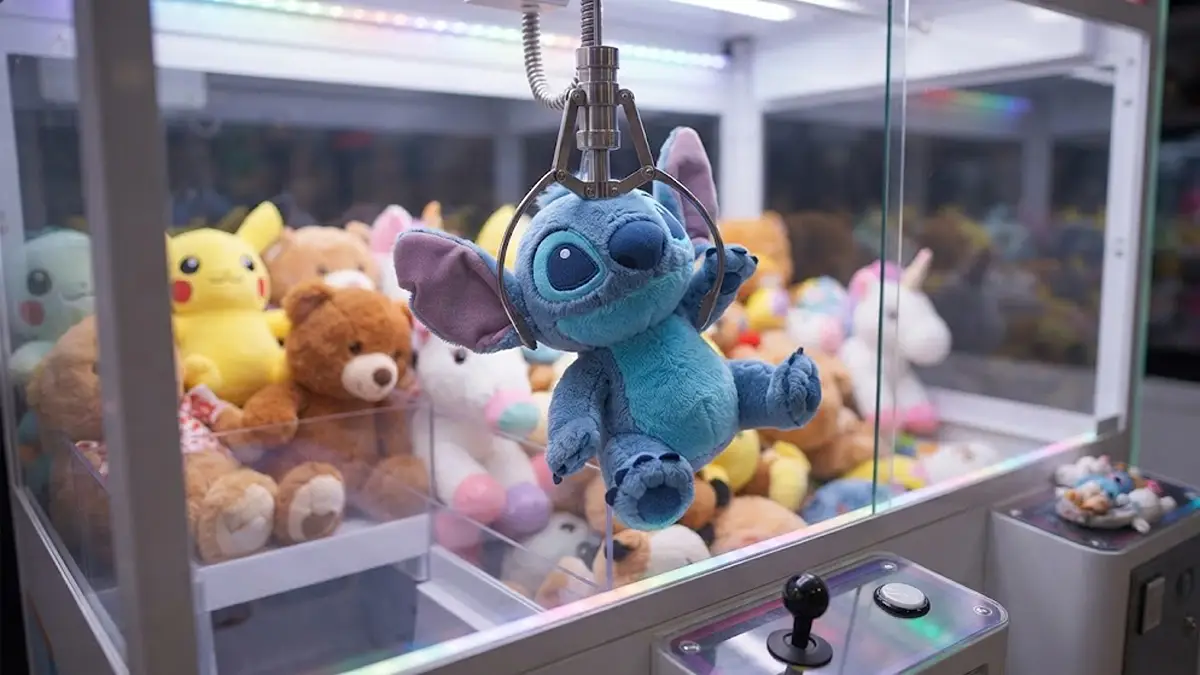
Matching prize weight, size, and shape to claw geometry stabilizes your win rates and protects your profit margins from mechanical jams or over-payouts.
Does your crane game empty its inventory without hitting revenue targets, or do players walk away frustrated by constant drops? Learning how to match prizes with different claw machines is one of the most effective ways to stabilize your payout rates and protect your operational margins.
Prize Specifications by Machine Type
A common mistake on route setups is treating every cabinet the same way. Different machine footprints require distinct prize scales to avoid overloading motors or burying the inventory in dead zones.
| Jenis Mesin | Prize Size Band | Target Weight |
|---|---|---|
| Mini & Countertop Units | 2-4 inch plush or 40-50 mm capsules | 18-42 gram |
| Standard Floor Machines | 5-10 inch mid-tier plush and boxed blind bags | 85-140 gram |
| Large-Cabinet Cranes | Standing plush with deep-grip claw clearance | Sehingga 225 gram |
Economic Calibration and Win Rate Settings
Your physical win settings must directly mirror your wholesale acquisition costs. Calibrating the claw’s voltage cycles to match these cost bands keeps players motivated while securing your gross margin targets.
- Low-Cost Fillers: Program high win frequencies of 1 in 5 kepada 6 plays for low-cost filler plush valued under 3 dollars to maintain high energy at family venues.
- Standard Mid-Tier Merchandise: Calibrate standard floor machines to a moderate 1 in 7 kepada 10 win rate for medium plush costing 3 kepada 8 dollars.
- High-Value Prizes: Restrict high-value merchandise up to 20 dollars to 1 win in 10 kepada 15 plays using 65% kepada 75% claw strength on strong cycles.
Strategic Prize Mix and Cabinet Layout
Visual presentation inside the cabinet acts as your primary marketing tool. Placing items randomly reduces the perceived value of your stock and fails to trigger impulse play.
- Inventory Ratio: Structure the inventory with a stable ratio of 70% low-cost plush to 30% eye-catching attraction items like blind boxes or gadgets.
- Anchor Placement: Position high-value anchor items at eye level, roughly 1.2 kepada 1.5 meters from the floor, to maximize player draw from across the room.
- Rotation Schedule: Refresh roughly 30% of the prize selection every 12 weeks, with lighter swaps in between, to maintain visual appeal and keep local repeat players engaged.
Running small test batches of any new toy line allows you to monitor actual slip and jam rates before committing to large wholesale shipments, keeping your machines running smoothly and profitably.
How to Refresh Prizes and Encourage Repeat Plays
Systematic prize rotation and tiered inventory structures protect profit margins while driving consistent player re-engagement.
Operators who want to refresh prizes and encourage repeat plays must treat their cabinets like active retail storefronts. Leaving a display static for months leads directly to declining play rates, so setting up structural inventory schedules keeps players returning.
Establish a Structured Rotation Cadence
A predictable rotation schedule keeps the machine visually interesting for regular players without creating an overwhelming workload for your staff.
| Rotation Type | Interval and Volume | Purpose |
|---|---|---|
| Micro-rotation | Every 1-3 weeks, swap 10-30% of visible stock | Keeps the display fresh without a time-consuming overhaul |
| Quarterly reset | Every 12 weeks, overhaul 50-70% of inventory | Matches seasons, holidays, and evolving pop-culture trends |
| Partial swap | Ongoing, as stock moves | Keeps evergreen plush in place and retires the slowest-moving items first |
Design a Tiered and Balanced Prize Mix
Relying on a single prize class limits your target audience. A varied inventory profile caters to both casual players looking for an easy win and high-stakes players chasing high-value items.
- Target inventory ratio: Maintain a baseline mix of roughly 70% low-cost plush toys and 30% high-appeal attraction items, such as blind boxes and licensed figurines.
- Multi-tier structures: Build clear prize tiers inside the cabinet so players can trade up from common wins to premium prizes.
- Dynamic machine settings: Align claw strength and difficulty parameters with the value tier of target prizes to protect your payout ratio.
Leverage Visual Merchandising and Thematic Scarcity
The layout of your inventory directly affects perceived winability. Strategic arrangement draws attention to high-value items and creates a sense of urgency.
- Strategic layouts: Use color-blocking and place premium hero items near the front window at eye level to maximize appeal.
- Thematic scarcity: Introduce limited-run stock or collectible series to motivate players to complete the set before the inventory runs dry.
- Local demographic audits: Evaluate neighborhood trends quarterly to choose themes, IPs, and colors that match regional preferences.
Run Performance Testing and Promotional Incentives
Data-driven testing removes the guesswork from purchasing decisions and ensures you only stock high-return inventory.
- Key performance tracking: Log daily plays, revenue, and stock depletion speeds per prize class to identify underperforming stock.
- A/B layout testing: Load different prize combinations in comparable machines over a strict two-to-three-week trial period.
- Time-bound promotions: Deploy prize-of-the-week features or double-chance weekends with adjusted, slightly easier payout settings.
From Prize Plan to Wholesale Order
Turning this selection strategy into a replenishment routine with a factory-direct supplier typically follows five steps:
- Inquiry and specification sheet: Send your machine model, claw opening span, chute width, and target weight bands so the supplier can shortlist compatible SKUs.
- Sample testing: Order small batches across each tier and run them in your own cabinets, monitoring slip, jam, and win-rate behavior over one to two weeks.
- Freeze the order spec: Confirm dimensions, filling weight, material, packaging, and carton quantities in writing before production starts, so later lots match the samples you approved.
- Pre-shipment verification: Check the finished batch against the frozen spec sheet and approved samples, using sampling inspection where order volumes justify it.
- Scheduled reorders: Align replenishment cycles with your rotation calendar, so new themes and top-performing SKUs arrive before the next planned swap.
Soalan Lazim
What are the most profitable prizes to put in a claw machine?
Profitable setups typically keep total prize cost at roughly 20% kepada 30% of machine revenue, meaning player spend runs three to four times the prize cost. Mainan mewah berkualiti tinggi, blind-box collectibles, branded keychains, and small electronic gadgets offer the ideal balance of high perceived value and low wholesale cost.
What size and weight should claw machine prizes be?
Standard arcade crane machines typically run on prizes between 5 dan 10 tinggi inci, with an optimal weight of 85 kepada 140 grams for reliable claw mechanics. Mini or countertop units perform best with 2 to 4-inch plushies or 40 kepada 50 mm capsules weighing 18 kepada 42 gram. To prevent mechanical jams, the largest edge of any prize must be smaller than both the claw’s maximum open span and the width of the prize chute.
Can you legally put blind boxes and mystery capsules in claw machines?
Generally yes, but legality depends on regional gambling, consumer protection, and amusement-prize regulations. In the United States, prizes aimed at children also fall under CPSC toy safety requirements, where applicable. Some jurisdictions require specific amusement-with-prizes licensing, enforce value caps, or mandate clear probability disclosures for randomized outcomes. Risk is minimized when using low-value, compliant retail merchandise with transparent content descriptions rather than high-value mystery items.
How do you select and configure prizes for child-friendly locations?
A balanced, high-performing kid-focused machine commonly uses a mix of 40% kepada 50% small-to-medium plush toys as the visual base, supported by collectible figures or blind boxes, capsule toys filled with fidgets or keychains, and a small share of lightweight gadgets or large anchor toys. Operators typically set more forgiving win rates in family locations to encourage repeat plays and long-term visitor loyalty.
Fikiran Akhir
While cheap, uncertified novelties might reduce your upfront inventory budget, sourcing factory-standard merchandise is the most reliable way to protect your margins against machine jams and player frustration. Aligning your prize mix with precise weight, shape, and size standards transforms your machines from static fixtures into high-yield revenue drivers.
We recommend reviewing our catalog of factory-tested plush, barang koleksi berlesen, and blind-box series designed for claw machine physics. Request a sample pack to test weight, grip, and physical clearance against your specific crane gantry settings, and contact our product specialists to secure a custom rotation strategy and volume pricing.