Calibrating your claw machine prize mix is the most effective way to escape the low-margin trap of empty play sessions and runaway inventory costs. Without a structured approach, you risk setting claw difficulty so tight that players walk away, or so loose that your cost of goods sold erodes operating profit.
This analysis benchmarks merchandise sourcing strategies against standard industry practices. We evaluate how balancing a 40 να 70 percent low-cost filler ratio with premium visual anchors secures a sustainable 25 να 35 percent payout ratio across different price-per-play tiers for μηχανή νυχιών operators.
What Makes a Balanced Claw Machine Prize Mix?
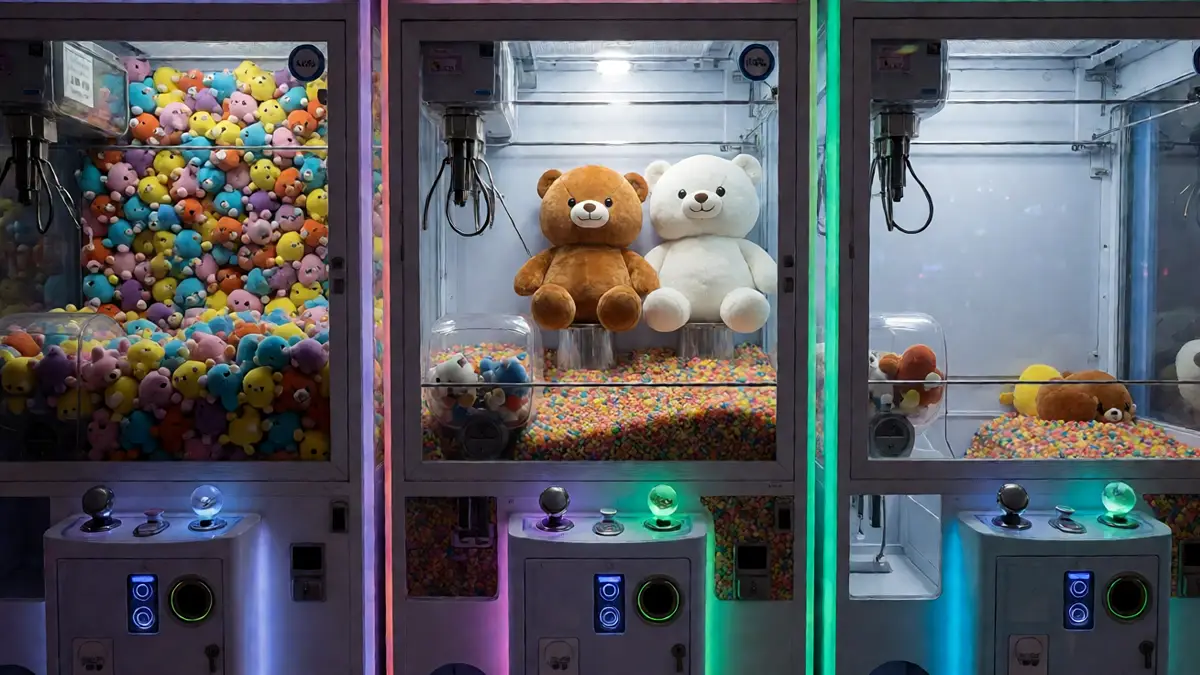
Why do some crane games sit completely ignored while nearby units draw a continuous line of players? The key is deploying a balanced claw machine prize mix that offsets high-value visual hooks with cheap, high-turnover fillers.
A profitable claw machine blends low-cost volume wins with rare premium anchors to maintain high play rates while securing a 3:1 να 5:1 revenue-to-cost ratio.
Why Mix Different Prize Value Levels
Running a single prize tier in a crane machine is a fast track to empty pockets. If every item in the cabinet is an expensive licensed plush, your payout settings must be set so tight that the claw feels dead. If everything is cheap filler, players walk right past without playing.
- Ongoing Player Engagement: Eye-catching premium prizes act as visual billboards to stop foot traffic, while cheap fillers keep players winning and feeding coins into the slot.
- Diverse Player Segments: A tiered mix captures casual players seeking an easy, low-cost win, alongside dedicated collectors targeting rare, high-value collectibles.
- Profitability Stabilization: Blending low-cost fillers with premium prizes keeps your payout math safe, protecting your target revenue-to-cost ratio.
- Inventory Turnover: Slower-moving high-ticket prizes stay visible for weeks to preserve appeal, while fast-moving low-cost items turn over in 5 να 30 days to keep the layout fresh.
Balancing Perceived Value and Actual Cost
The crane game business is built on the gap between wholesale prize cost and perceived player value. Maximizing this gap increases plays per session.
- Procurement vs. Retail Gap: Prioritize licensed or trending items that carry high retail appeal but cost only $1.50 να $6.00 wholesale, creating strong perceived value.
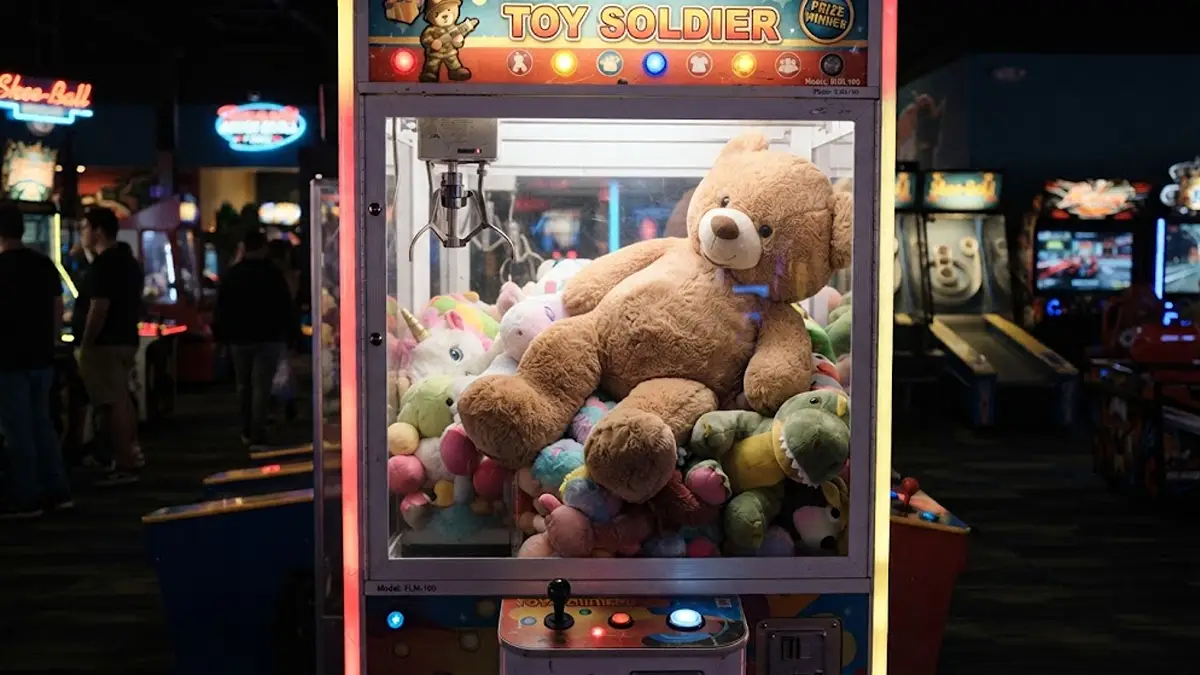
- Layered Merchandising: Arrange high-value spotlight prizes in central, well-lit positions at eye level, forcing players to focus on the best items.
- Average COGS Control: Keep your cost of goods sold down by scattering a few spotlight prizes among bulk, highly winnable novelty fillers.
- Win Experience Optimization: Tune standard payout settings so low-cost items drop consistently, while reserving premium, high-impact wins for rare occasions to generate excitement.
How Should You Balance Low-, Mid-, and High-Value Prizes?
A profitable claw machine prize mix balances 40% να 70% low-cost filler with 10% να 20% high-value anchors to sustain a 25% να 35% payout ratio.
Optimizing your prize mix requires a strict mathematical division between high-frequency wins and high-margin anchors. If difficulty is too high, players walk away; if too low, inventory costs destroy margins.
Using Affordable Prizes to Maintain Variety
Low-cost inventory forms the foundation of crane operations. These items drive high win frequencies, giving players visible proof of win viability while protecting margins.
To keep operations profitable, build your inventory around these technical parameters:
- Wholesale Price Range: Settle between $0.20 και $3.00 ανά μονάδα.
- Inventory Share: Allocate 40% να 70% of the machine’s capacity to this tier.
- Target Payout Ratio: Maintain a strict 25% να 35% cost-of-goods-sold range.
- Core Categories: Small 4-to-6 inch plush, παιχνίδια με κάψουλες, and novelty keychains.
Stocking multiple colors, designs, and blind-box collectibles encourages players to chase set completions. Swap this low-cost stock every 2 να 4 weeks to maintain visual novelty and secure repeat traffic from local visitors.
Using Premium Prizes to Create Attention and Excitement
High-value prizes operate as visual marketing billboards. Their purpose is stopping foot traffic, generating social media content, and driving initial player interest.
Incorporate premium inventory under these strict operational limits:
- Prize Share: Limit high-value items to 10% να 20% of the total mix.
- High-Tier Items: Feature 14-inch jumbo plush, licensed characters, or consumer electronics at central focal points.
- Showcase Crane Settings: Charge $2.00 να $5.00 per play with tighter win thresholds for premium items costing $8.00 να $20.00 wholesale.
- Target Margin: Keep cumulative machine payout within the sustainable 25% να 35% target.
Regularly check individual machine metrics to ensure high-value drops do not push overall COGS above target thresholds. Restricting the quantity of high-value prizes keeps your average unit cost safe while preserving strong aspirational appeal.

How Do You Match Prize Cost With the Price Per Play?
Matching claw machine prize cost to your price per play ensures you maintain a sustainable 25% να 35% cost-of-goods-sold margin while driving high play volume.
| Play Price | Wholesale Prize Cost | Average Plays Per Win | Effective Cost Per Play |
|---|---|---|---|
| $0.50 | $0.30 – $1.00 | 4 – 6 plays | $0.05 – $0.25 |
| $1.00 (Πρότυπο) | $1.00 – $3.00 | 10 – 12 plays | $0.10 – $0.30 |
| $1.50 – $2.00 | $3.00 – $8.00 | 8 – 15 plays | $0.25 – $0.80 |
| $5.00+ (Ασφάλιστρο) | $8.00 – $20.00+ | 5 – 10 plays | $0.80 – $2.00 |
Connecting Prize Costs With Expected Revenue
How do you calibrate your machine’s prize cost against player spending without squeezing your margins? Operators often struggle with empty coin boxes because they choose prizes based on gut feeling instead of hard math.
To run a profitable route, treat your plush and novelty inventory as a direct percentage of gross revenue. Keep total prize and supply costs within 25% να 35% of gross revenue to protect margins. The IAAPA provides industry benchmarks to validate your target ranges against regional averages.
- Effective cost per play: Determine this metric by dividing the wholesale unit cost of the prize by the average plays per win.
- Gross margin per play: Calculate this by subtracting the effective prize cost per play and local overhead from your established play price.
- Planning sequence: Set target revenue shares, estimate payout frequency, and verify remaining margins cover local operating expenses.
Adjusting Prize Value for Different Play Prices
Changing the price per play on a machine immediately breaks your existing payout structure if you do not adjust your prize values accordingly. You cannot run a $2.00 play with the same $0.50 wholesale trinkets without losing player trust, nor can you give away expensive licensed items on a $0.50 play without losing your margin.
- Wholesale tier matching: Match price-per-play tiers directly to appropriate wholesale prize categories, utilizing cheap bulk options for low-cost plays and licensed plush for premium plays.
- Benchmark configuration: Deploy a setup at $1.00 per play using $3.00 να $4.00 wholesale prizes with payout cycles tuned to 10 να 12 plays.
- Premium venues: Leverage higher play prices of $1.50 να $2.00 in family entertainment centers to justify premium merchandise or more generous win rates.
- Margin protection: Recalculate prize-mix economics completely whenever altering the price per play to prevent sudden margin compression.
Monitor your play-to-win ratios continuously. Keep pricing and prize costs aligned, watch collections, and adjust before margins slip.
How Should Prize Mixes Change by Venue and Audience?
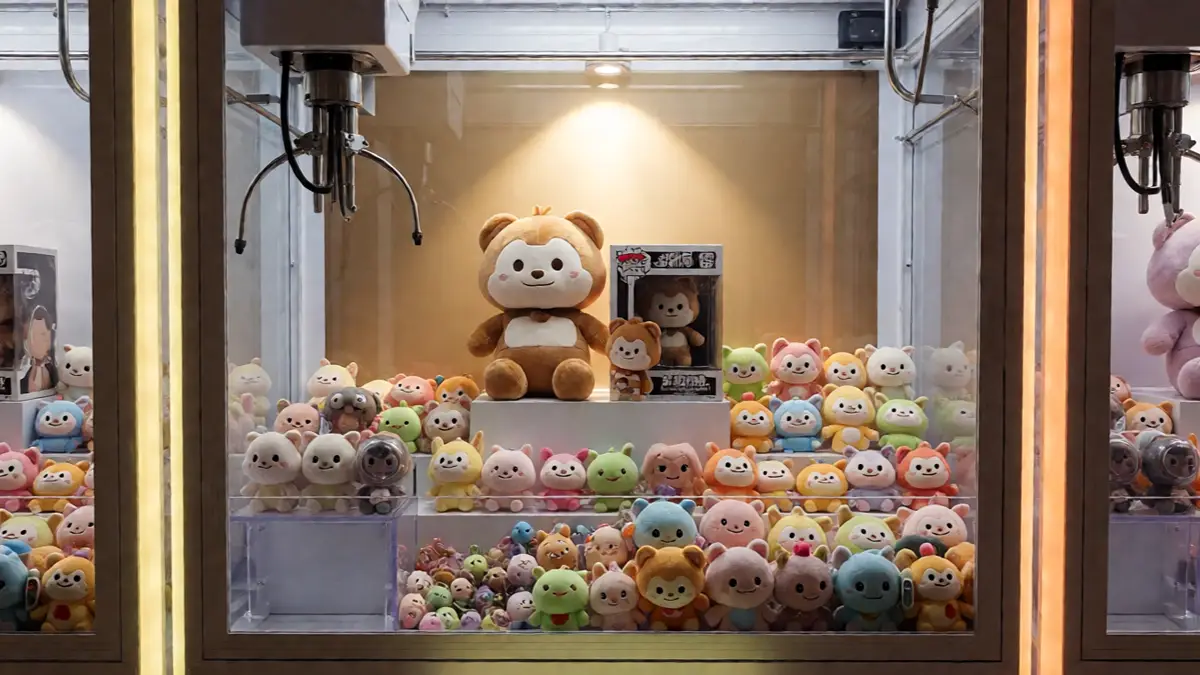
Matching claw machine prize mixes to specific venue demographics balances player expectations with disciplined payout targets, directly driving higher repeat play and stronger floor margins.
Adjusting prize mixes by venue and audience turns casual onlookers into repeat players while protecting margins. A one-size-fits-all setup fails because kids chase tactile comfort, whereas adults hunt for brand equity and trending novelty.
Prize Mixes for Family Entertainment Centers and Arcades
Family entertainment centers (FEC) and traditional arcades thrive on high-volume, high-energy foot traffic. In these environments, you are selling the immediate emotional win to children and parents simultaneously, requiring a highly visual and dense presentation.
- Plush Foundation: Build the inventory foundation around colorful, easily recognizable small and medium plush to maximize child appeal and secure immediate recognition.
- Inventory Split: Structure the machine inventory with a 70/30 ή 80/20 split between low-cost baseline plush and premium licensed items to balance cost with player pull.
- Visual Anchors: Position larger, high-value hero prizes prominently in the cabinet to serve as visual anchors that drive social proof across the playing floor.
- Rotation and Revenue: Rotate the machine inventory every 2 να 8 weeks to maintain high repeat play and support a steady 3:1 να 5:1 revenue-to-cost ratio.
Prize Mixes for Malls, Restaurants, and Adult-Focused Venues
Locations with older, transit-oriented, or casual dining crowds demand a completely different merchandising strategy. Softness and size take a backseat to brand equity, curiosity, and high perceived value.
- Curated Assortment: Transition the assortment toward brand-name collectibles, trend-driven gadgets, and electronics to appeal directly to older demographics.
- Foot-Traffic Intercepts: Use high-impact hero items in open mall spaces to arrest the attention of passersby and convert casual foot traffic into players.
- Low-Friction Setup: Keep restaurant game mixes simple and low-friction to fit shorter customer dwell times and casual, spontaneous play styles.
- Layered Structure: Create a layered prize structure with low-cost fillers for frequent wins, mid-tier novelties for engagement, and premium anchors for excitement.
How Can You Optimize Prize Mix Without Hurting Player Appeal?
Balancing a claw machine prize mix requires pairing 80% low-to-mid cost filler items with 20% premium hero anchors to protect profit margins while driving continuous player engagement.
How do you keep players feeding bills into your crane when sourcing costs rise? Optimize your prize mix to maximize visual appeal without inflating COGS.
Using Variety to Increase Perceived Value
Sustaining player interest requires a visual environment promising both instant wins and aspirational targets. A rich assortment increases perceived value and play sessions.
- Tiered Inventory Split: Maintain an 80/20 ratio of low-to-mid cost items ($0.50-$3.00 wholesale) to high-value hero items ($3.00-$5.00+ wholesale) to balance play volume with a strong visual draw.
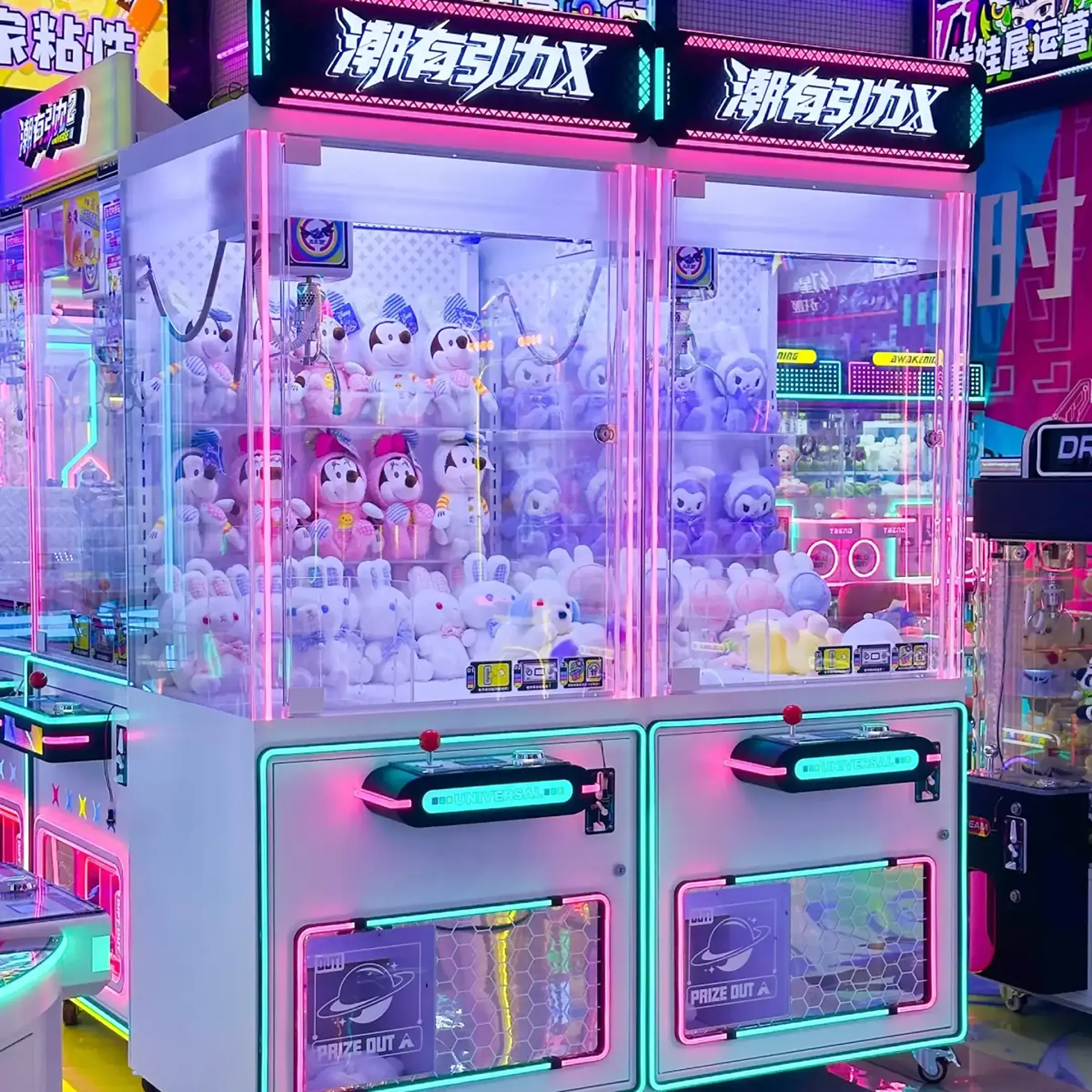
- Assortment Diversity: Mix multiple categories, including plush, licensed IP, capsules, and novelties, ensuring clear visual differentiation between tiers so players can self-select targets.
- Rotation Cadence: Refresh the prize display every 2 να 4 weeks to capture returning foot traffic and create a sense of urgency.
- Display Merchandising: Group prizes in clean visual clusters, use risers to lift premium hero items to eye level, and maintain pristine cabinet cleanliness to boost perceived retail value.
Players judge their winning chances by how a machine looks, meaning careful shelf staging directly influences total plays per day.
Reducing Costs Without Lowering Perceived Value
Maximizing margins does not mean loading your machine with cheap, unappealing toys that drive customers away. Smart operators reduce payout costs through mechanical calibration and high perceived-value prize sourcing.
- Cost-to-Revenue Target: Keep average prize costs within 20% να 35% of total gross revenue, and limit individual hero prize procurement to a maximum of 20% of their targeted payout revenue.
- Win Interval Calibration: Align physical claw strength and payout settings to trigger a sustainable win rate of 1 win per 5 να 10 plays, maintaining a fair, skill-based player experience.
- Perceived Value Sourcing: Procure wholesale items with high retail appeal or bundle multiple ultra-low-cost filler items together to make the prize bed look abundant.
- Value-Based Pricing: Transition standard setups to $1.00 per play and premium IP setups up to $5.00 per play to absorb rising wholesale costs without degrading prize quality.
- Operational Waste Controls: Track slow-moving stock to prevent stagnant inventory, preserve optimal stocking density, and ensure bright cabinet lighting to keep items appealing.
Smart sourcing and calibration defend your margins without losing player trust.
How Do You Measure the Performance of a Prize Mix?
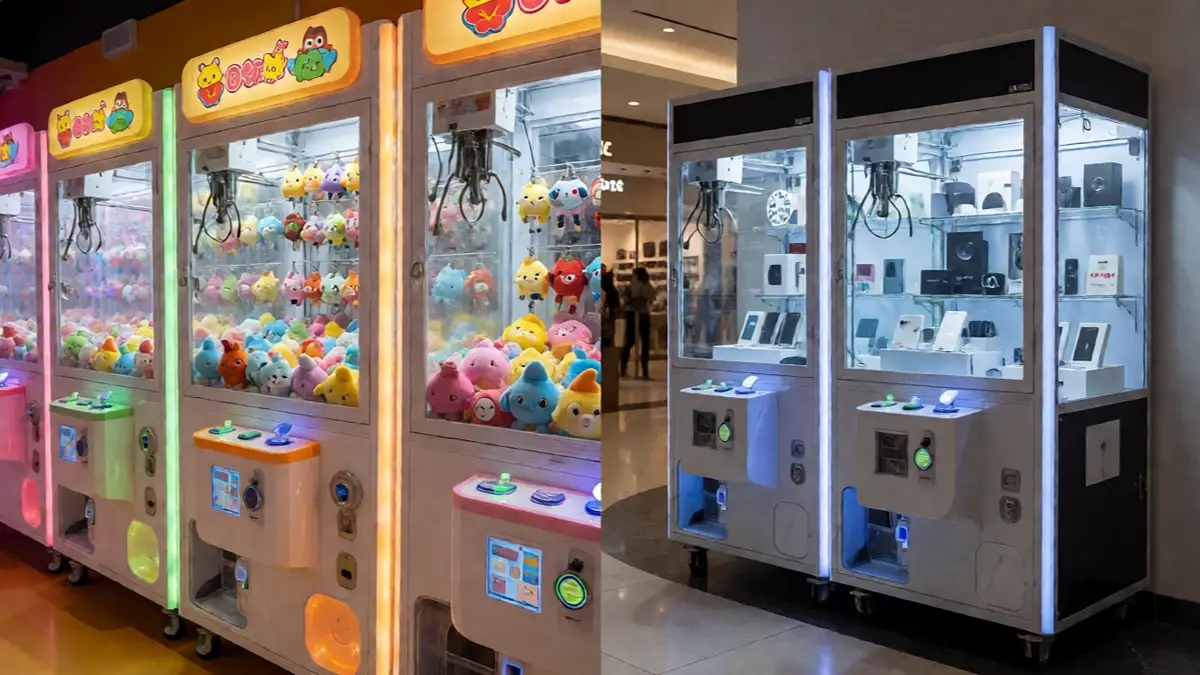
Profitable operations rely on keeping total prize costs between 25% και 35% of gross revenue, balanced by clear win rates across tiered inventory.
How do you know if your claw machine inventory is driving revenue or bleeding margins? To measure prize mix performance, track concrete metrics like landed costs, win rates, and player behavior.
Tracking Prize Costs, Plays, and Win Rates
To maintain a profitable route, look beyond the raw invoice price. Account for every cent spent getting each item into the cabinet and translate it into a per-play metric.
- Landed Unit Cost: Calculate the true value of each prize tier by adding wholesale pricing, inbound ocean or air freight, and sourcing fees.
- Effective Prize Cost Per Play: Divide the landed unit cost by the actual number of plays required to secure a win.
- Payout Benchmarks: Target total prize costs at 25% να 35% of your overall machine revenue to secure healthy operational margins.
- Tiered Win Rates: Set low-cost fillers to drop every 8 να 15 plays, while premium anchor items should require 12 να 20 or more plays before paying out.
- Location Win Targets: Maintain overall win rates between 20% και 30% for high-traffic family venues, but drop to 15% να 20% in high-end locations to protect margin.
This tiered tracking system prevents high-value prizes from wiping out your profits while ensuring players win often enough to keep inserting coins.
Adjusting the Mix Based on Player Response and Profitability
Raw numbers tell only half the story; the true test lies in how players interact with the machines daily. If players walk away frustrated, your play count will drop.
- Filler Ratios: Increase the proportion of low-cost, frequent-win items immediately if players show frustration or if play volume begins to slide.
- Hero Prizes: Position high-perceived-value items as visual anchors to drive repeat plays, balancing their premium cost with longer win cycles.
- Venue Strategy: Run low-cost, high-frequency wins in casual transit areas, and transition to premium, restricted payouts in major family entertainment centers.
- Margin Pruning: Cut expensive prizes immediately if the total payout percentage exceeds your target margin, or if the price per play is set too low.
- Performance Metrics: Evaluate mix changes by tracking shifts in daily plays, first-time-to-repeat conversion rates, and the total prize-to-revenue ratio.
Track live data and adjust consistently to keep machines engaging and profitable.
Συχνές Ερωτήσεις
What is a good claw machine prize mix?
A successful setup relies on a tiered inventory. Operators typically stock 60% να 80% low-cost or small plush items, 20% να 30% mid-range prizes like collectibles or blind boxes, και 10% να 20% high-value anchor prizes to create excitement. Keeping the prize bed shallow, around one to two layers deep, ensures the claw can grip items properly.
How much should a claw machine prize cost?
Operators manage prize costs as a percentage of play revenue. The standard industry target is 20% να 35% of revenue, with many operators aiming for a 30% να 40% operating band. For a standard $1 play machine, this translates to a blended wholesale prize cost of roughly $0.20 να $0.33 per play.
Should claw machines feature high-value prizes?
Ναί, but only as a minor part of the total mix, usually limited to 10% ή 15% of the inventory. These hero items drive foot traffic and increase the perceived value of the machine. They require lower win ratios and work best in premium, high-traffic locations where play prices support the higher expense.
How should prizes be priced for different play prices?
The cost of the prize must align with the price per play and target win rate to keep the total prize cost share around 25% να 35% of revenue. For a $0.50 play, use items costing $0.30 να $1.00 with a 20% να 30% win rate. For a premium $2.00 play, select licensed items costing $3.00 να $8.00 with an 8% να 15% win rate.
How many prize value levels should a claw machine have?
Operators generally use three to five prize value levels. Three levels, covering low, mid, και είδη υψηλής ποιότητας, work well for simple operations. Four or five levels work best for premium or showcase machines where one or two hero prizes anchor the visual display.
Τελικές Σκέψεις
Running a profitable crane game route requires a disciplined, mathematically balanced claw machine prize mix. Relying on gut feeling leads to player frustration and empty coin boxes. A rigorous framework backed by quality factory-standard merchandise safeguards your venue’s cash flow against rising procurement costs.
For operators upgrading their fleet: define your play-price tier and target payout ratio, request machine specifications and certification documentation, approve a sample unit, then lock configuration before placing a bulk order. TKY’s factory and R&Ομάδα Δ can analyze your venue demographics and design a high-turnover inventory plan with OEM customization and 12-hour response support. Contact TKY to build a more profitable floor strategy.