Claw machines, also known as crane games or skill cranes, are popular amusement devices found in arcades, centres commerciaux, and retail spaces worldwide. Understanding how these machines work, their main components, and the factors that affect performance can help both players and operators make better decisions.
This guide explains the basic structure, operating principles, machine types, and commercial considerations behind modern claw machines, including movement systems, claw settings, and purchasing factors.
What Is a Claw Machine and How Does It Work?
A claw machine functions as an electromechanical prize merchandiser, balancing tactile player input with software-driven grip calibration to secure consistent operator margins.
Definition and Core Structural Components
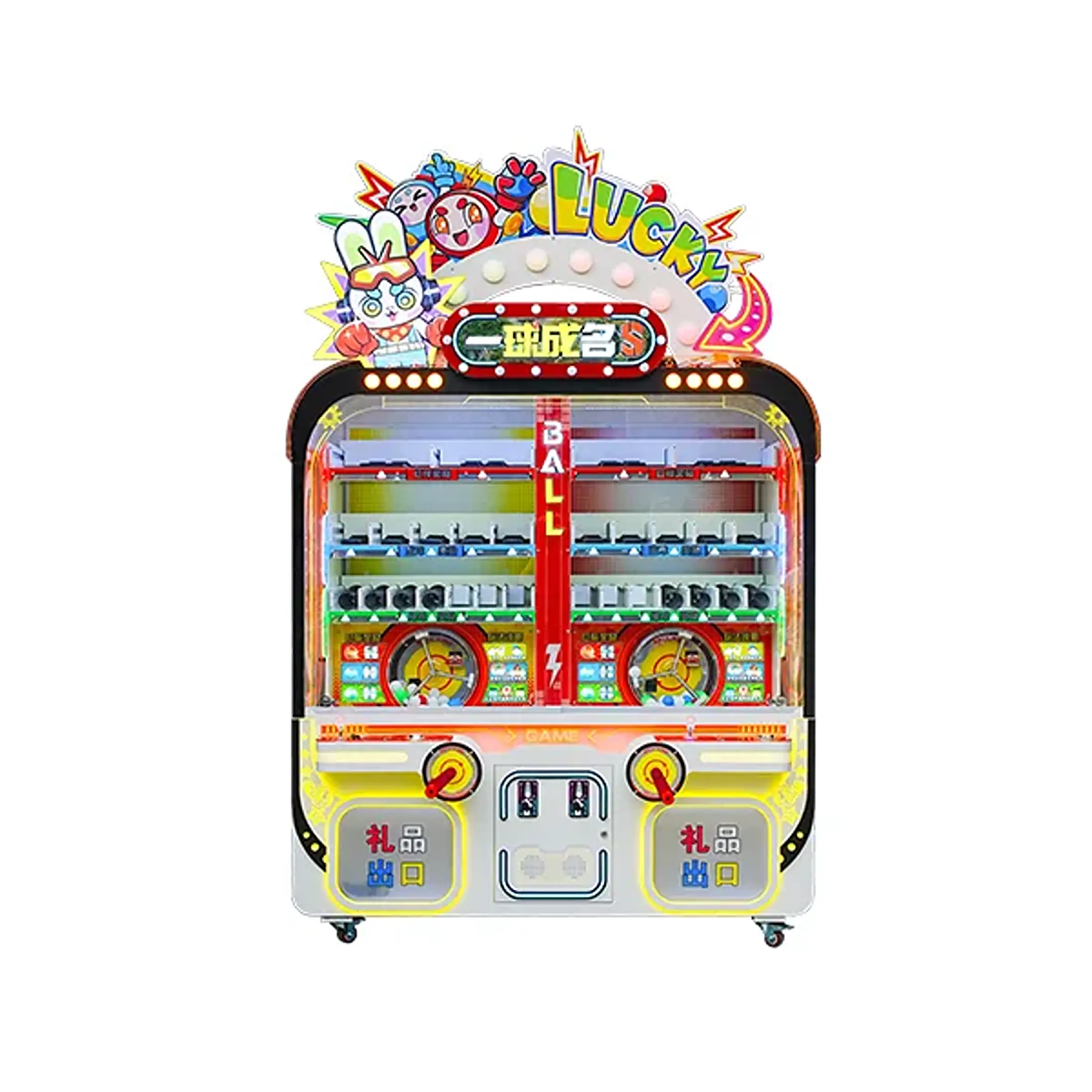
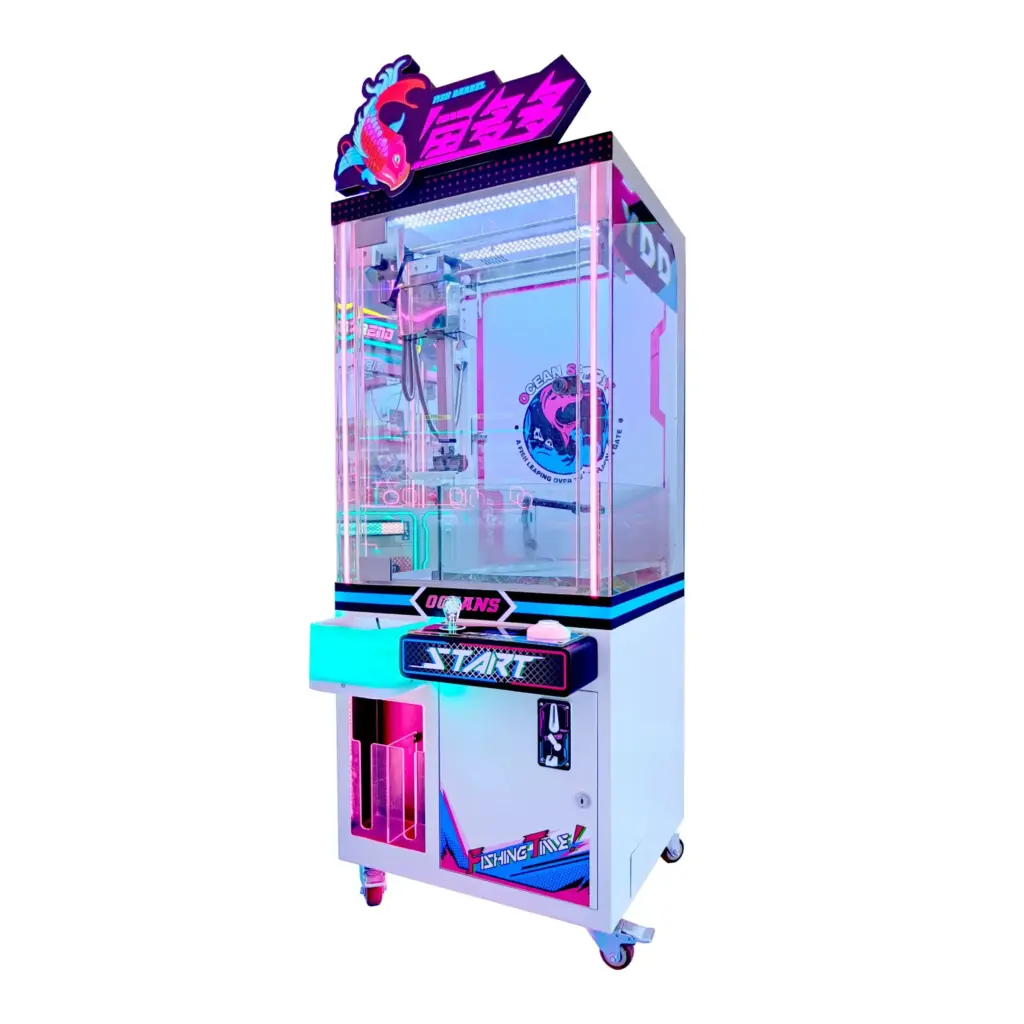
A claw machine is a type of electromechanical arcade game designed to display and dispense physical prizes through a player-controlled grabbing mechanism. In commercial spaces, operators recognize these units by several names depending on the target region and regulatory framework.
While standard European and American operators prefer terms like “crane game” ou “skill crane,” Asian markets dominate the supply chain with regional designations. These include the iconic “UFO catcher” in Japan and “Zhua-Wawa-Machine” in mainland China. Regardless of the name, every commercial cabinet relies on a standardized physical architecture to secure prizes and manage the transaction loop.
The basic layout divides the machine into key functional zones to protect assets while driving impulse play:
- Transparent display cabinet: A reinforced glass or high-impact acrylic enclosure that showcases the high-value prize pool under bright LED lighting.
- Internal storage area: The staging floor where operators arrange plush, capsule toys, or boxed figures to optimize visual appeal and density.
- Prize chute: A secure, sloped physical barrier that directs won prizes down to the player while blocking physical tampering.
- Secure pickup port: The external access point at the bottom of the cabinet where users retrieve their physical rewards.
Electromechanical Systems and Movement Mechanics
Modern crane games rely on precise coordinate mechanics to translate joystick inputs into physical motion. The internal gantry operates on a three-axis Cartesian coordinate system, allowing the claw carriage to cover every square inch of the prize field.
- X-Axis: Handles left-to-right lateral movement across the gantry rails.
- Y-Axis: Directs forward-to-backward depth movement along the side tracks.
- Z-Axis: Manages the vertical lowering and lifting of the claw assembly via a steel cable winch.
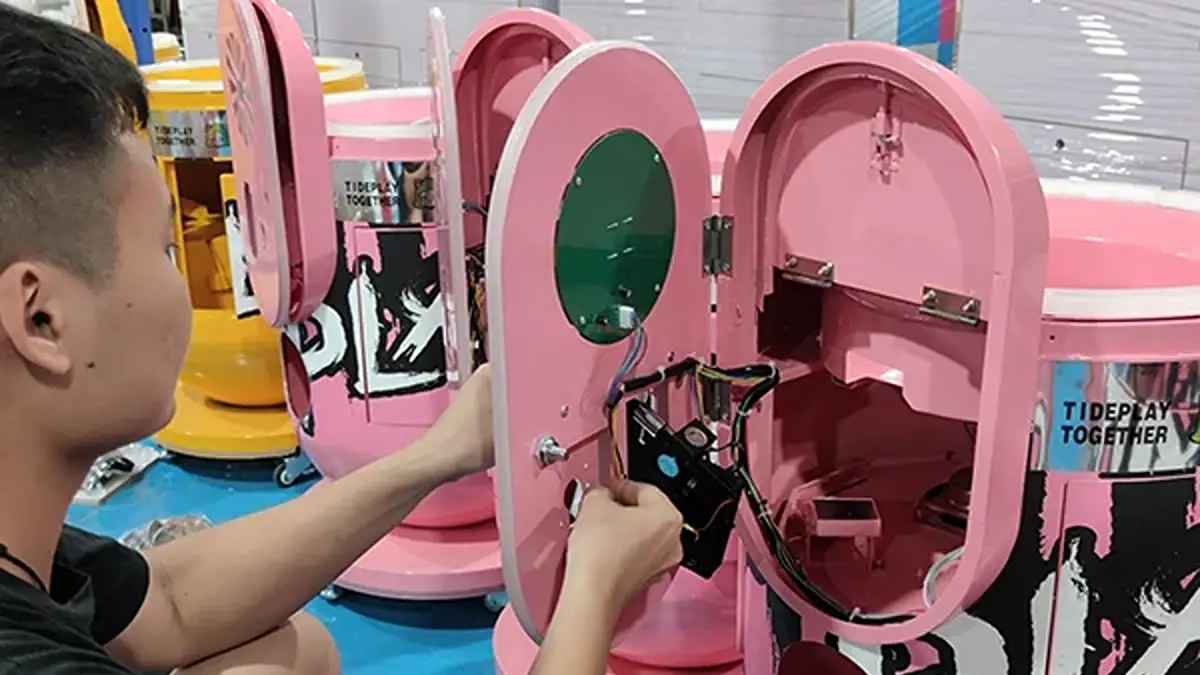
A central printed circuit board (PCB) acts as the operational brain, regulating stepper motor speeds and interpreting player controls. Heavy-duty commercial systems run on dedicated electric motors and steel cables for long-term wear resistance.
Most machines à griffes commerciales use electric motors and mechanical transmission systems to control claw movement. Hydraulic systems are uncommon in standard arcade claw machines and are mainly found in specialized demonstration or industrial applications.
The Step-by-Step Gameplay Cycle
The entire customer journey follows a highly optimized, automated loop. Once the payment validator—whether processing coins, jetons, or cashless card taps—confirms the transaction, the PCB registers a game credit and starts a countdown timer.
The physical cycle moves systematically through these sequential phases:
- Positioning: The player maneuvers the joystick to align the claw carriage directly over their targeted item before the timer expires.
- Descent: Pressing the drop button stops horizontal movement and triggers the Z-axis motor to lower the open claw into the prize pile.
- Capture and Lift: Upon reaching maximum depth or contact threshold, the claw closes around the prize, and the winch retracts the assembly to its top home position.
- Delivery: The gantry automatically moves the carriage to the prize chute coordinates, where the claw opens to release the item before resetting for the next play.
Claw Strength Calibration and Payout Mechanics
The financial viability of a claw machine depends on its electronic grip-strength calibration. Modern control boards use variable voltage limiters to dynamically adjust claw tension during different phases of play. This prevents operators from losing high-value inventory too quickly while maintaining a compelling user experience.
Operators configure internal software to balance the payout ratio based on local regulations and margin targets:
- Payout-Based Models: The PCB restricts full gripping voltage to a preset cycle (such as once every 15 plays). On non-payout plays, the claw starts with a firm grip but drops voltage during the lift phase, causing the prize to slip out.
- Skill-Based Models: The machine maintains consistent, predictable claw strength across all games. Success relies entirely on the player’s positioning accuracy, prize angles, and center-of-gravity calculation.
Operators usually adjust machine settings based on prize type, value, and target audience. Machines with lower-cost prizes may use simpler settings, while premium prizes often require more careful calibration.
Different Types of Claw Machines for Commercial Use
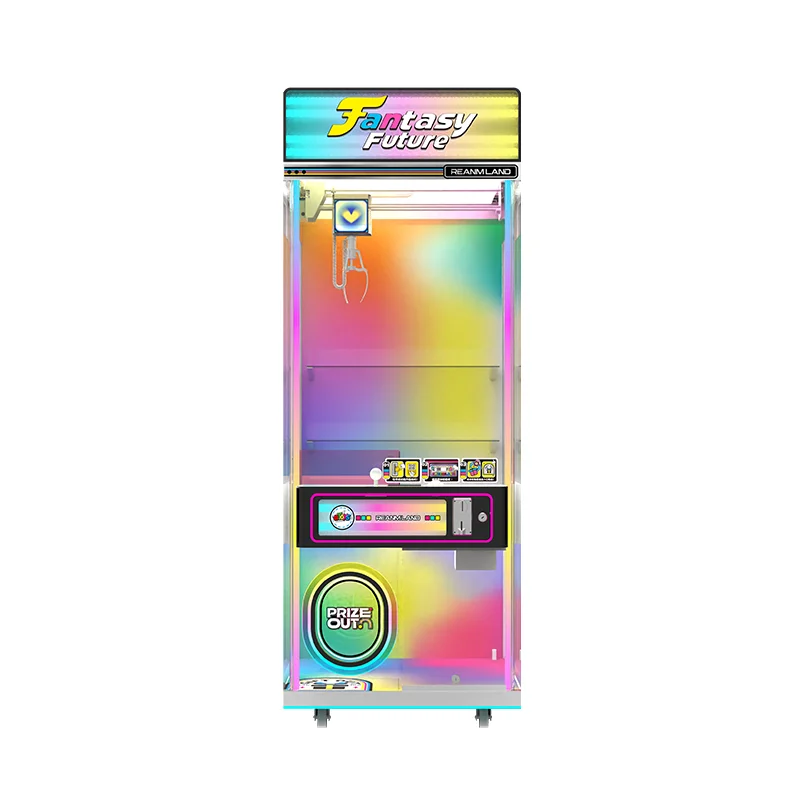
The best claw machine format depends on available space, prize size, and the type of audience the location attracts.
Are you selecting the right equipment layout for your amusement footprint? Choosing among the different types of claw machines for commercial use requires matching your venue’s space constraints with local player demographics.
Standard and Size-Based Cabinet Formats
Cabinet size dictates placement viability and target margins. Selecting the wrong physical footprint leads to either wasted square footage or missed impulse revenue.
- Classic Three-Prong Cranes: Versatile, general-purpose installations designed for shopping malls, lobbies, and family entertainment centers.
- Mini machines à griffes: Compact units designed to optimize small retail counter spaces and transit zones, capturing high-margin impulse plays.
- Oversized Giant Units: High-visibility anchors built for high-traffic plazas to house jumbo plush and premium reward tiers.
Standardizing your route on classic sizes simplifies parts inventory, but adding mini units adjacent to registers captures spare change that would otherwise walk out the door.
Multi-Player Islands and Experiential Layouts
Group play changes the financial dynamics of a location. When players interact socially, average dwell times and session counts climb.
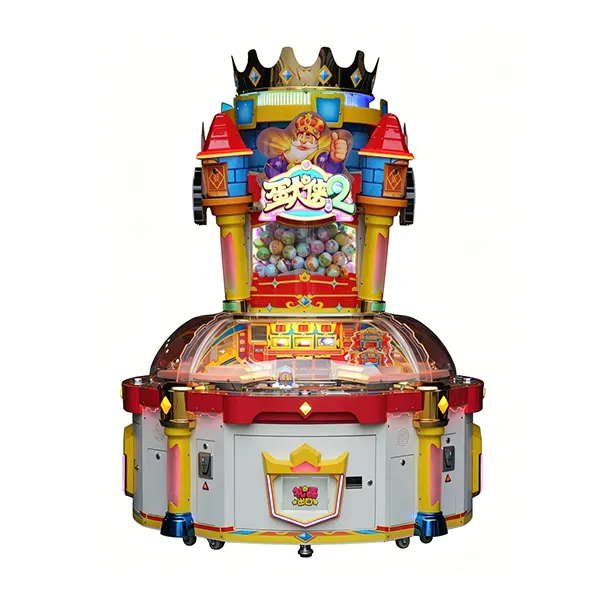
- Multi-Player Island Layouts: Shared-footprint configurations (2-to-4 players) that optimize floor space and increase simultaneous game sessions.
- Six-Claw Specialty Setups: High-density prize layouts utilizing multiple independent cranes to encourage competitive and repeat attempts.
- Human Claw Installations: Large-scale event rigs where the participant is harnessed as the claw, driving crowd spectacle and social media reach.
Island configurations generate higher throughput per square meter than single-player cabinets, making them essential for high-rent venues.
Alternative Prize-Delivery Mechanics and Skill Games
Not every prize fits the physical grip profile of a classic metal claw. When dealing with boxed collectibles or high-value tech, alternative mechanics protect margins and build player trust.
- UFO Catchers: Dual-claw setups popular in anime and character-merchandise spaces, focusing on strategic tipping and nudging.
- Key Grab Systems: High-value prize machines requiring precise alignment to slot a key and open electronics compartments.
- Barber-Cut Systems: Mechanical string-cutting units that replace claws with scissor-blades to drop high-end hanging rewards.
String-cut and key-alignment units shift the perception from chance to total control, attracting players who shun standard cranes.
Smart Technology Integration and Hardware Systems
Modern operating environments require remote monitoring and robust hardware to minimize downtime. Smart technology ensures real-time oversight of route performance.
- Smart Telemetry Cranes: Digitally managed cabinets with touchscreens, cashless nodes, and real-time remote payout adjustments.
- Themed Cabinets: Custom-branded housings aligned with local IP partnerships or specific venue aesthetics to deepen immersion.
- Drive Variations: Electro-mechanical systems for low-maintenance standard toys, paired with heavy-duty hydraulic lifters for oversized loads.
Transitioning your fleet to telemetry-enabled, cashless cabinets reduces cash-handling overhead and allows instant adjustment of parameters.
Boost Venue Profits with Premium Claw Machines

How Claw Machines Create Interactive Entertainment Experiences
Physical touch, sensory feedback, and real-world stakes make crane games highly engaging, turning simple mechanical attempts into shared social spectacles.
How do claw machines consistently dominate modern interactive entertainment experiences when high-fidelity digital gaming is available on every phone? The answer lies in physical mechanics. Unlike flat screens, mechanical amusement games merge tactile controls with physical stakes, creating an environment that digital apps cannot replicate.
Core Mechanics and Psychological Feedback Loops
Tactile interaction provides a type of feedback that screens lack. Simple joystick controls and a single drop button allow anyone from toddlers to grandparents to play immediately, removing technical friction. This accessibility makes it easy for casual passersby to participate without a steep learning curve.
Once a player inserts a coin, a strict 15-to-30-second timer forces rapid decisions. This tight window intensifies the risk-reward loop, keeping player adrenaline high as they rush to align the gantry before the countdown ends.
Success depends on hand-eye coordination, yet physical variables like plush density, prize weight, and claw sway introduce natural uncertainty. When the claw successfully grips and drops a prize, the immediate descent into the physical chute delivers a sense of real-world gratification that digital achievements cannot match.
Sensory Cabinet Design and Strategic Prize Staging
The cabinet acts as a physical stage. Transparent glass panels and bright, focused LED grids expose the entire playfield, turning individual games into spectator sports for passing crowds. Bystanders gather to watch, analyze, and cheer, converting a single-player game into a group experience.
Dynamic audio and lighting track the game state, shifting patterns and playing tension-building melodies during the claw’s descent to heighten the emotional payoff. Win fanfares and flashing lights signal success to the entire room, drawing more players to the area.
Operators use specific visual merchandising strategies to drive play volume:
- Visual Anchors: Staging premium or licensed items prominently on top of the pile to capture attention and spark immediate interest.
- Targeted Curation: Offering a diverse mix of classic plush, anime figures, and small electronics to match regional demographics and collector tastes.
- Strategic Layering: Arranging stock to balance perceived winnability with actual mechanical challenge, keeping the game tempting but profitable.
Immersive Scale and Spectacle-Driven Human Claws
Scaling up the physical hardware can significantly enhance the visual impact and player engagement of claw machines in large venues. Oversized cabinets, configurations multi-joueurs, and themed machine designs can become attractive focal points in family entertainment centers, centres commerciaux, and entertainment spaces.
For commercial operators, larger claw machine formats provide opportunities to create more immersive experiences through bigger prize displays, customized cabinet designs, and interactive gameplay features. These elements help increase visibility, encourage repeat plays, and strengthen the overall entertainment value of the venue.
These large-scale experiential setups require strict operational frameworks to run safely:
- Certified Harnesses: Securing participants safely using professional-grade, multi-point climbing gear.
- Dual-Operator Controls: Restricting movement through redundant control panels managed by trained safety marshals.
- Delineated Boundaries: Isolating the prize pit from spectators to prevent accidents during active lift cycles.
Advanced Digital Interfaces and Brand Activations
Modern setups bridge the gap between mechanical play and digital ecosystems. Hybrid cabinets now project augmented reality overlays directly onto the viewing glass, adding virtual animations and narrative layers over the physical claw. This blending of physical and digital gaming keeps the format fresh for younger audiences.
At trade shows and corporate pop-ups, brands use customized claw cabinets as high-impact marketing funnels. By running these machines on free-play modes or custom event tokens, organizers remove all payment friction, ensuring a steady stream of active participants who associate the fun of winning with the brand.
Experiential marketing agencies integrate several digital touchpoints to capture leads and drive social reach:
- QR Code Qualifiers: Requiring users to scan codes, complete surveys, or submit contact info to unlock play credits.
- Social Sharing Loops: Triggering camera captures of wins to encourage immediate online posting.
- Verified Skill Settings: Utilizing consistent grip strength configurations to establish player trust and foster competitive replayability in specialty arcades.
Common Applications of Claw Machines in Arcades and Retail Spaces
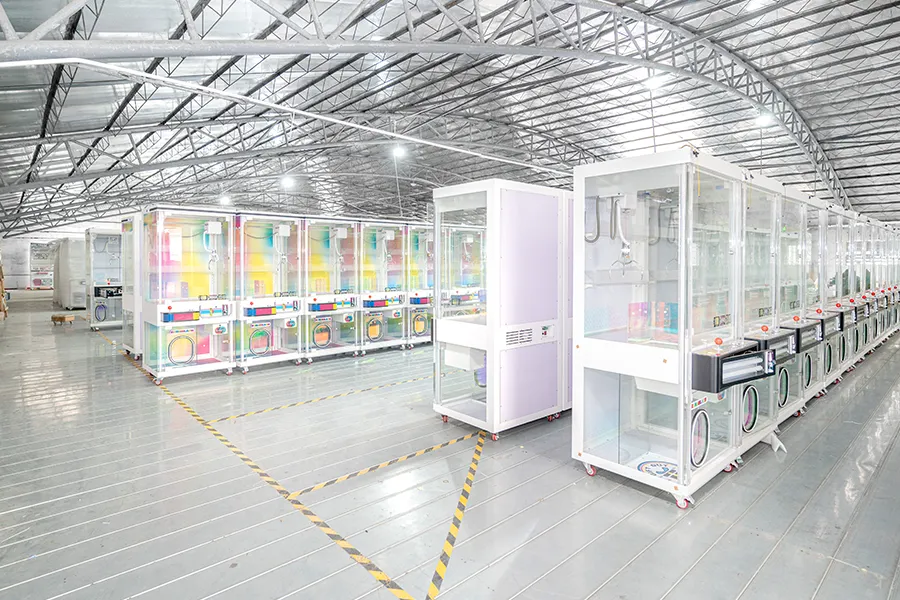
Claw machines serve as high-yield physical anchors across modern commercial floor plans, transforming passive foot traffic into immediate, high-margin impulse play.
How do you maximize revenue per square meter in a crowded commercial zone? Operators deploy claw machines to tap into impulse-play psychology, turning dead floor space into highly profitable interactive centers.
Anchor Attractions in Family Entertainment Centers and Arcades
Traditional arcades rely heavily on a balanced mix of attractions. Within family entertainment centers (FEC), these machines establish a physical presence that immediately captures player attention.
- Core Visual Anchor: Acts as a key visual focus alongside video games and ticket redemption units to drive immediate player engagement.
- Near-Win Dynamics: Capitalizes on near-win physics and adjustable physical grip settings to encourage rapid, repeat gameplay.
- Strategic Positioning: Directs visitor circulation through placement near main entrances, high-traffic corridors, and dining zones.
Foot-Traffic Magnets and Impulse Play in Retail Environments
Retail operators face a constant battle to capture passing foot traffic. Integrating amusement hardware directly into retail workflows provides an elegant solution to capture impulse spending without increasing payroll costs.
- High-Density Placement: Positions standard and mini machines near escalators, supermarket checkouts, and cinema lobbies to capture constant passenger flows.
- Dwell-Time Monetization: Converts passive waiting times into quick entertainment opportunities that require a minimal physical floor footprint.
- Supplemental Cash Flow: Complements shopping mall corridors and transit hubs by generating reliable, low-maintenance revenue.
Promotional, Image de marque, and Event-Based Marketing Tools
Beyond pure amusement, businesses use these interactive cabinets as experiential marketing assets. Brands use the inherent thrill of the chase to distribute promotional items and engage consumers directly.
- Direct Incentive Distribution: Distributes logo merchandise, custom retail samples, and store discount vouchers to drive in-store sales.
- Experiential Customization: Deploys custom-wrapped cabinets and themed prize mixes tailored specifically for product launches and seasonal events.
- Corporate Centerpieces: Serves as interactive crowd-pullers at corporate gatherings, pop-up shops, and community charity campaigns.
Hybrid Experiential Spaces and Dedicated Clawcades
The modern amusement sector is witnessing the rise of dedicated, single-concept venues. These specialized spaces leverage high-density machine layouts to create social destination zones.
- Social Destination Design: Populates specialized, prize-only venues with high-density machine setups designed to maximize social sharing and spectator excitement.
- Omnichannel Integration: Blends physical cabinets with remote, app-based play channels to reach players far beyond the physical venue floor.
- Demographic Appeal: Transforms traditional retail storefronts into modern, interactive amusement spots that appeal directly to youth demographics.
Selecting and positioning these machines is a game of foot traffic and demographic alignment. Whether running a high-volume route or optimizing a flagship retail corridor, success relies on matching the cabinet format to the local crowd while keeping mechanical uptime high.
Key Factors to Consider Before Buying a Claw Machine
Evaluate foot traffic thresholds, structural cabinet build, and precise payout logic calibration to guarantee predictable ROI before committing capital to any equipment supplier.
Are you planning to add a high-yield asset to your venue, or are you about to make a costly mistake by purchasing under-engineered hardware? Buying a claw machine requires analyzing foot traffic thresholds, physical clearance parameters, and structural durability before wire-transferring capital to a supplier.
| Key Decision Factor | Critical Metric / Target | Operational Impact |
|---|---|---|
| Emplacement & Space | 150+ daily visitors; 18-inch rear clearance | Ensures volume viability and routine service access. |
| Build & Security | Reinforced metal frame; 90-second wear-part swap | Withstands heavy wear and lowers overall downtime. |
| Calibrage des griffes | Descent <0.8 m/s; grip trigger <0.3s | Maintains balanced payout percentage and player trust. |
| Paiement & Telemetry | NFC/QR compatible; real-time cloud diagnostics | Captures cashless impulse play and allows remote updates. |
| Prize Economics | 25%–45% COGS target; ≥2-year parts warranty | Protects operating margins and limits CapEx depreciation. |
Location Dynamics, Foot Traffic, and Space Requirements
Placing your machine in the wrong spot kills profitability before the first coin drops. You must run physical and analytical checks on the prospective site to ensure high volume and smooth daily operations.
- Foot Traffic Target: Select high-traffic locations with at least 150 daily visitors to maintain commercial viability and steady play volume.
- Service Clearance: Verify physical cabinet dimensions and preserve at least 18 inches of rear clearance to allow routine technician access.
- Pouvoir & Contract: Confirm the availability of a dedicated 110V electrical outlet and execute a signed revenue-share agreement before delivering the cabinet.
Securing these operational baselines early protects your capital investment and prevents costly emergency re-placements.
Durabilité des armoires, Security, and Service Design
Public venues subject amusement hardware to constant physical stress. Buying a flimsy cabinet leads to rapid depreciation and high repair costs.
- Structural Build: Choose reinforced metal frames, tempered glass panels, and heavy-duty lock systems to protect your cash box and prizes from tampering.
- Rapid Component Access: Ensure cabinet designs allow a technician to swap out standard wear parts, like joysticks or claw pads, in under 90 seconds.
- Supply Chain Speed: Confirm your distributor or manufacturer can ship replacement PCBs, moteurs, and sensors domestically within 3 à 5 jours.
Downtime directly drains your weekly income, making rapid field-serviceable architecture a must-have feature.
Claw Tension Control, Calibration, and Gameplay Fairness
A poorly calibrated claw quickly alienates players or gives away your inventory too fast. Perfecting the balance of grip strength and physics mechanics builds player trust while protecting your bottom line.
- Software Calibration: Prioritize mainboards that support software-adjustable claw strength to manage payout percentages precisely while keeping the game engaging.
- Precision Metrics: Verify that the crane operates with a claw descent speed under 0.8 meters per second and triggers the grip within 0.3 seconds of object contact.
- Anti-Wedging Geometry: Ensure the prize area features physical baffles and anti-tumble cradles to stop prizes from sliding into unreachable corners.
Consistent, fair physical interactions encourage repeat play, whereas rigged-feeling gameplay drops retention rates.
Payment System Compatibility and Remote Software Monitoring
Modern players expect frictionless transaction options. Upgrading your payment acceptance and tracking performance remotely simplifies route management.
- Payment Acceptance: Install name-brand coin or bill validators and verify the cabinet supports cashless upgrades for NFC, QR codes, and mobile wallets.
- Telemetry Dashboards: Use cloud-based diagnostic software to monitor real-time plays, payout percentages, codes d'erreur, and remote firmware updates.
- Onboard Adjustments: Configure flexible play pricing, multi-play discounts, and custom game difficulty curves straight from the operator control panel.
Data-driven route operators use live telemetry to optimize their prize-stocking schedules without driving to the site daily.
Prize Cost Structuring, ROI Planning, and Manufacturer Guarantees
Your hardware purchase represents only one part of the financial equation. Aligning inventory costs with your localized revenue potential guarantees a faster path to profitability.
- Prize Margins (COGS): Keep actual prize costs strictly between 25% et 45% of gross revenue to protect operational margins.
- ROI Modeling: Map out a conservative 12-month payback projection that includes local play volume, permit fees, and venue commission structures.
- Manufacturer Assurances: Secure a minimum 2-year parts warranty alongside a 30-day performance guarantee for claw consistency.
Sticking to this mathematical framework lets you scale your business from a single trial machine into a highly profitable multi-unit amusement fleet.
Foire aux questions
What is a claw machine and what are they commonly called?
The amusement industry formally classifies a claw machine as a claw crane, crane game, or prize redemption merchandiser. This electromechanical game contains a prize bin and a joystick-controlled physical gantry and gripper. Consumers and players often refer to them simply as claw machines, toy grabbers, or UFO catchers.
How does a claw machine work?
Players insert payment to activate a countdown timer, then use a joystick to position a motorized carriage along horizontal X and Y axes. Pressing the drop button triggers a vertical Z-axis motor to lower the claw. The claw closes upon contact, retracts upward, and travels to the prize chute to release the item. Operators configure the main control board for either consistent grip strength (skill-based) or variable grip strength linked to specific payout schedules (payout-based).
What are the main components of a commercial claw crane?
A commercial claw machine features a heavy-duty cabinet with tempered glass panels, a motorized crane gantry, and a spring-loaded claw assembly running on an electromagnetic coil. It also integrates a main control PCB running game and payout logic, a power supply unit, a payment validator supporting coins, bills, or cashless cards, and an aesthetic package with LED lighting and audio speakers.
Are claw machines profitable for business operators?
Claw machines generate highly profitable, low-labor, semi-passive income. Well-placed units in shopping malls, cinémas, and family entertainment centers typically bring in $500 à $1,500 in monthly net profit. These assets regularly achieve 50% à 70% gross margins and deliver a payback period of 3 à 6 months.
How much does a commercial claw machine cost?
A standard new commercial-grade claw machine typically costs between $1,200 et $2,500. Compact countertop or mini models start around $500 à $1,200, while premium, high-traffic interactive or multiplayer showcase units range from $3,000 to over $8,000.
How long do commercial claw machines last?
High-quality commercial claw machines generally last 5 à 10 years, while premium, well-maintained units regularly reach 10 à 15 years. Individual wearable components like the claw mechanism, courroies d'entraînement, and steel cables require replacement every 1 à 4 years to maintain uptime.
How should I choose a claw machine supplier?
Choose a supplier with verifiable manufacturing facilities, model-specific certifications (including CE, RoHS, and UL), transparent shipping terms, and robust after-sales support with available spare parts. Standard industry practice requires testing a pilot batch of 1 à 3 units for 30 days to verify reliability, build quality, and payout accuracy before scaling.
Pensées finales
While generic machines offer lower upfront costs, sourcing equipment built to a verified Quality Factory Standard remains the only way to safeguard your operating margins against sudden mechanical failures and costly weekend downtime. Cheap wiring and uncalibrated control boards quickly turn an expected revenue driver into an inactive liability that alienates players. Investing in commercial-grade, reinforced hardware ensures your cabinets maintain high play volumes and deliver predictable, long-term returns.
We recommend starting with a pilot order of one to three test units to verify our chassis durability, claw tension accuracy, and telemetry software on your own floor. Our engineering team stands ready to customize cabinet branding, dimensions, and payment configurations to match your venue profile. Reach out to our distribution team to request a current catalog and discuss custom OEM specifications.