A container of coin-op cabinets that fails an electrical inspection costs far more than the discount that bought it. Choosing an arcade equipment manufacturer is a risk transfer: you hand a stranger your floor budget, your opening date, and your venue’s reputation.
An arcade equipment manufacturer builds machines inside its own plant: cutting sheet metal, wiring harnesses, writing firmware. A reseller buys finished cabinets and puts a nicer logo on the marquee. That difference decides who can still fix your machine in month fourteen.
The checks below run in the order that catches a bad supplier earliest. Each asks for a document, a record, or a live look at the factory floor. Verbal capability claims are worth nothing on an invoice.
What Makes a Reliable Arcade Equipment Manufacturer?
Reliability rests on four auditable pillars: electrical safety paperwork, powered testing, rugged cabinet build, and spare parts supply.
Every pillar can be verified before money moves. Ask for the document, then check it against the exact model on your quote. An arcade equipment manufacturer that owns its design keeps those files ready.
| Evaluation Pillar | What to Ask For | What It Protects |
|---|---|---|
| Electrical safety | Model-specific test reports and declarations of conformity | Customs clearance and venue licensing |
| Quality system | ISO 9001 scope plus batch inspection records | Repeatable assembly across a bulk order |
| Cabinet build | Frame spec, harness layout, internal component brands | Uptime under daily player abuse |
| Parts and support | Wear-part stock lists and exploded diagrams | Revenue between service visits |
Electrical Safety Markings That Hold Up
Fire marshals, insurers, and venue landlords ask for paperwork, not opinions. In the EU, arcade cabinets carry CE marking under the Low Voltage Directive (2014/35/EU) and the EMC Directive (2014/30/EU). RoHS (2011/65/EU) covers restricted substances.
Testing usually runs to EN IEC 60335-1, which names coin-operated appliances explicitly, or to EN IEC 62368-1 for the screen and computer inside. For US venues, FCC Part 15 governs electromagnetic interference, and cabinets sold into commercial spaces sit in Class A.
Many malls and chain operators also require an NRTL (Nationally Recognized Testing Laboratory) mark, UL or ETL, against UL 22, the safety standard for indoor amusement machines. A company-wide certificate proves nothing about your model, so ask which standard and which test house signed it.
Quality Systems and Powered Testing
ISO 9001 tells you a factory writes its processes down. Check that the certificate scope names manufacturing rather than trade only, then ask for the latest batch inspection record. Batch release normally follows attribute sampling under ISO 2859-1, where the acceptable quality limit (AQL) is agreed between buyer and seller.
Then ask what happens before cartons close. Cabinets should run powered and playing through an aging stage, so a weak power supply or an intermittent coin acceptor fails in the factory, not on your opening weekend. Get the duration and the record format in writing.
Cabinet Engineering Under Daily Abuse
Players lean on and shake these cabinets hundreds of times a day. Build quality decides whether a machine survives that treatment or becomes a maintenance line item.
- Structure: Steel frames, welded joints, and wide anti-tip bases keep a tall cabinet upright during energetic play.
- Wiring: Labelled harnesses, a clear grounding path, and overload protection shorten every future fault search.
- Payment hardware: Named coin acceptors and bill validators from established suppliers keep transactions fast and fraud rare.
- Materials: Plastic parts rated to UL 94 flammability classes reduce fire load around heaters and lamp drivers.
Paperwork That Proves the Claim
CE-marked goods sold into the EU need a responsible person established in the Union, a duty under Regulation (EU) 2019/1020 since July 2021. Ask for the name and address, then check it appears on the machine label.
Also request the electrical schematic, the EMC test report, and the declaration of conformity for your model. A factory that designed the cabinet sends these the same day. A reseller starts asking its supplier.
Why Factory Capability Matters for Buyers
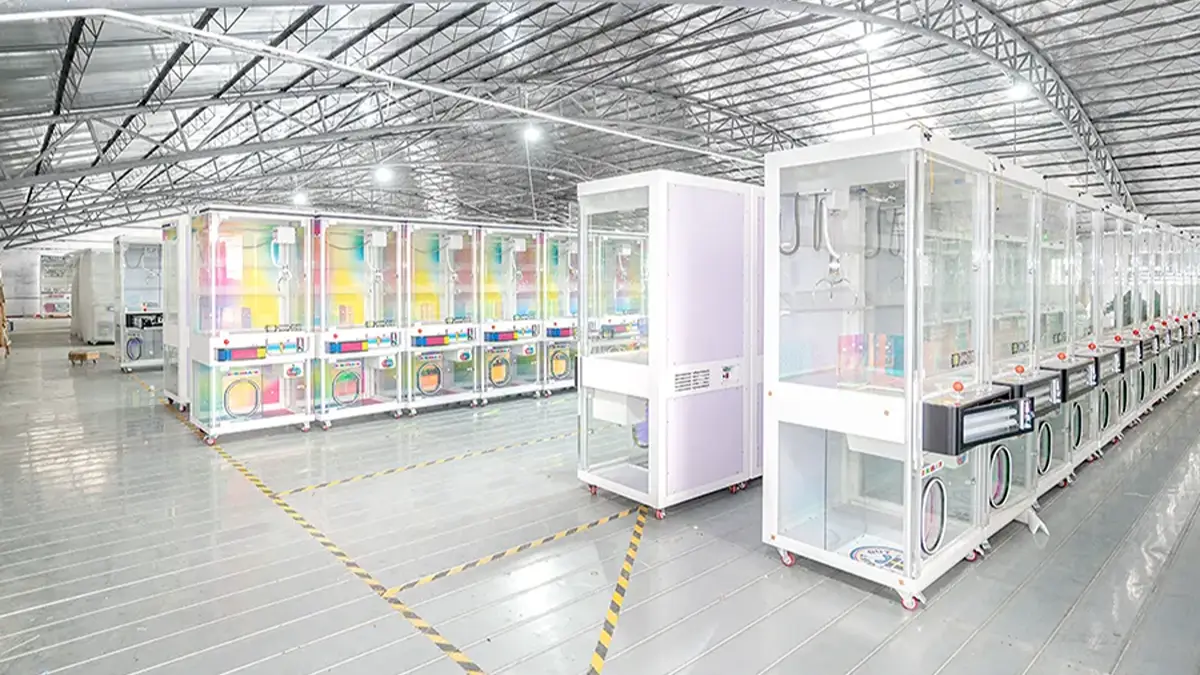
Direct factory control sets your unit price, your delivery date, and whether spare boards still exist in year three.
Price is the visible difference between a plant and a middleman. The invisible one matters more: who controls the change order when your market asks for a different payment method six months later. A real arcade equipment manufacturer answers with an engineering queue, not a promise.
What a Trading Company Cannot Give You
A trading house adds a margin layer and sells you the convenience of not visiting a factory. It cannot give engineering answers, firmware revisions, or component traceability, because those sit with whoever built the cabinet. Our breakdown of the difference between a manufacturer and a trading company covers the tell-tale signs.
A trading partner is not always wrong for a small trial order of proven stock. It is the wrong choice the moment your floor needs a change.
Delivery Dates and Production Queues
Missed delivery does not just move a shipping date. It moves a grand opening, and a delayed opening in a shopping centre can cost a season of rent against zero revenue.
Outsourced assembly makes that worse, because your order joins a queue you never see. Ask which line builds your model and what happens to your slot when a big order lands.
Engineering Changes After the First Order
Every operator eventually asks for something: a payout change, a new language, a cabinet that fits a narrow arcade bay. Factories answer in drawings and firmware commits. Intermediaries answer in waiting time.
Test it with one question. Ask how a change request reaches the engineer who owns the design, and how fast a revised wiring diagram comes back. If nobody can name the path, there is no path.
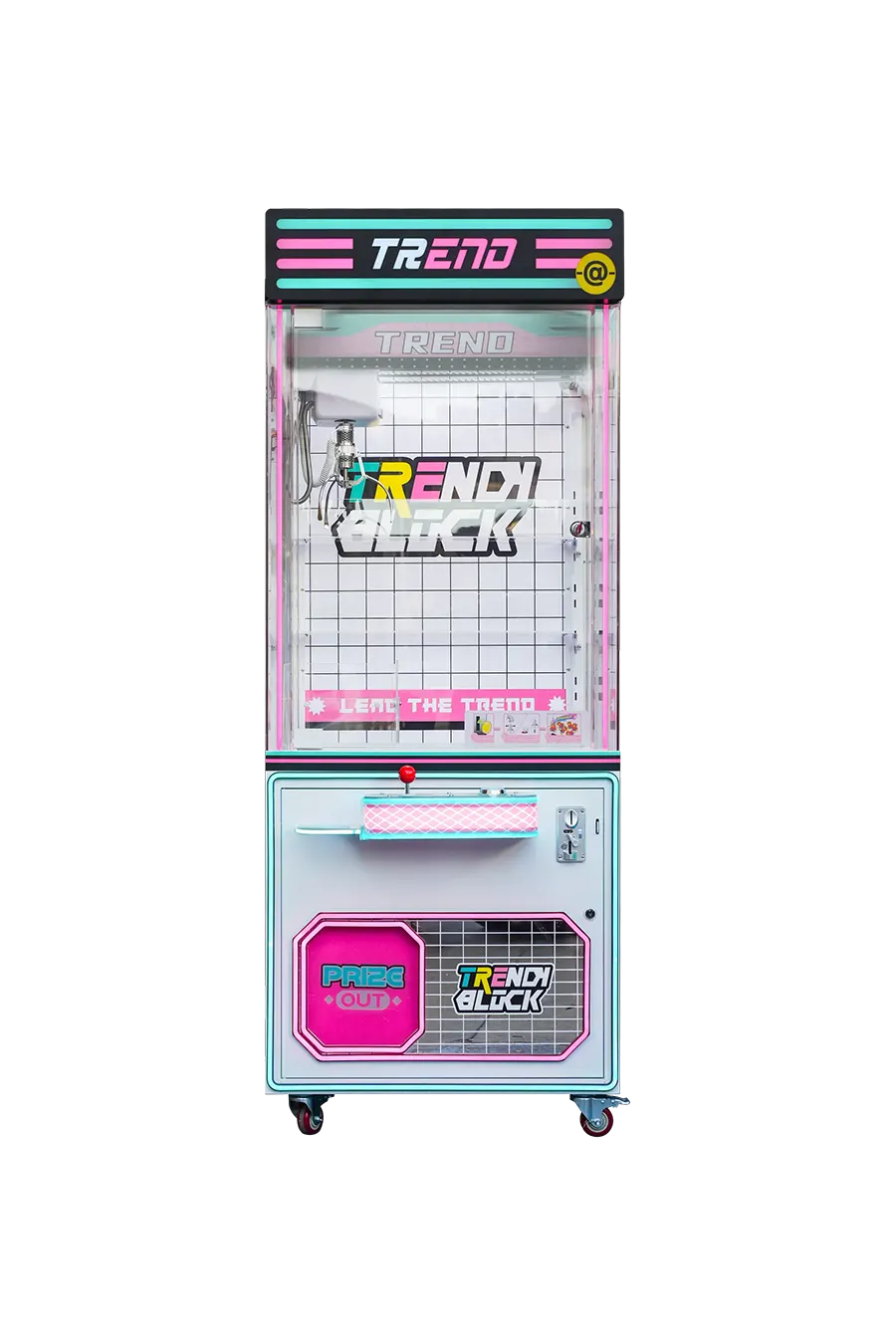
Evaluating R&D and Product Development Ability
Design ownership is what you actually buy: hardware revisions, firmware control, and patents decide who can fix your machine.
Glossy catalogs hide weak engineering. When you test R&D and product development ability at an arcade equipment manufacturer, ignore the renders and ask for the working files behind them.
Team and Tools You Can Verify
Ask how many engineers sit on staff, which disciplines they cover, and whether mechanical, electronic, and software design happen under one roof. A supplier that outsources the control board cannot shorten your fault queue. Then ask for dated drawings and revision history on a part you recognise; a headcount claim in a PDF is not evidence.
Mechanical Modules Decide Uptime
Artwork attracts the player; the mechanism decides whether the machine keeps earning. Generic claw heads, off-the-shelf turntables, and unbranded motors are where jamming, prêmios perdidos, and service calls start.
At TKY we built our own hardware turntable to stop the jam that stalls prize delivery, and our published field data puts the failure-rate reduction at 35%. Our design portfolio covers more than 100 patentes. Ask which parts a supplier designed itself, and how many patents cover the machine on your quote.
Firmware and Payout Control
Self-developed software lets an operator change payout behaviour, difficulty curves, language packs, and payment handling without waiting on a vendor. Licensed firmware from a board supplier does the opposite: updates arrive when the vendor decides.
Ask who writes the code and where the update files live, since anti-fraud logic and sensor validation both protect the cash box.
Prototyping and Design Ownership
Custom work moves fast only when the factory owns its prototyping. CNC cutting, 3D printing, and small-batch controller builds inside one plant turn a drawing into a sample in days.
- Paperwork first: Sign an NDA before you send artwork or a cabinet concept, and confirm it in writing.
- Tooling ownership: Establish who pays for moulds and fixtures, and who holds them if you move suppliers.
- Design rights: Confirm your branded artwork files stay yours and cannot reappear on another client’s cabinet.
Understanding Production Capacity and Quality Control
Capacity claims matter only when the plant shows lines, aging racks, inspection records, and a loading plan for your machine type.
When a family entertainment center misses its opening because machines sit unfinished on a shop floor, the buyer skipped a capacity check that cost one phone call. Capacity also extends past the last screw, into how cabinets travel.
Metrics Worth Asking For
| Question | A Real Factory Answer |
|---|---|
| Which line builds my model? | A named line, a weekly unit count, and a photo of the station |
| How busy are you in my month? | A booked schedule showing the free window and the buffer |
| What is your batch defect rate? | Inspection records with numbers and the corrective actions taken |
| Which parts do you make in-house? | A list covering sheet metal, harnesses, boards, or software |
Answers like these reveal fit. A plant running a hundred small custom jobs a year handles a branded pilot order differently from one built for standard cabinets by the container. Match the factory tier to your order size, and read our guide to choosing commercial claw machines for model-level selection.
The Inspection Chain and Third-Party Checks
Ask for the quality chain in the supplier’s own words: material incoming checks, sheet-metal and frame work, electrical assembly, powered aging, final function test, then packing. Each hand-off should leave a record with a name and a date.
Our staging is public on the fábrica e R&D page, including the burn-in hall where cabinets run full play cycles before crating. If a supplier never describes its process, treat it as undocumented.
You need not trust a factory’s own records. Firms such as SGS, Bureau Veritas, Intertek, and TUV Sud can run a pre-shipment inspection covering quantity, workmanship against an AQL plan, function testing, embalagem, and markings. Book it before the balance payment.
Packing, Crating, and Container Loading
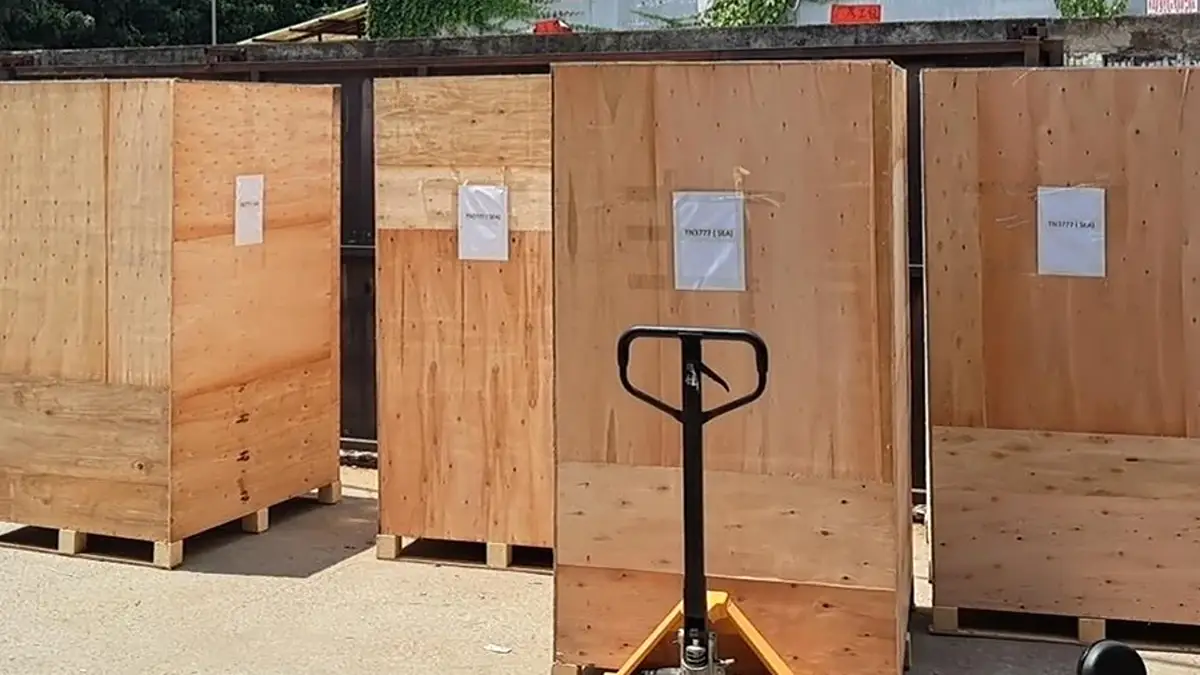
The quoted machine price is not the landed price. Freight, duty, crating, and floor preparation decide what a cabinet really costs you, and most sourcing guides stop at the certificate check.
Ask how your machines travel. Heavy cabinets ship fully assembled in braced wooden crates, or partly knocked down to raise units per container, and each option changes freight cost per machine. We offer both a wooden-frame crate and a bare-machine export wrap.
Request the loading plan with per-container quantity, net and gross weight, and machine footprint, then check your dock height and door width.
Customs Paperwork and Site Readiness
A clean entry needs a commercial invoice, a packing list, and a bill of lading, plus the certificates your market asks for. US ocean imports also require an Importer Security Filing, the “10+2” e-filing, before the container loads. Most importers hand the entry summary to a licensed customs broker.
Coin-op cabinets commonly clear under HTS 9504.30.00, and claw-type vending cabinets under 8476.89.0000, both at a free general rate. China-origin goods on those lines carry the Section 301 List 4A surcharge of 7.5%. Duty layers have changed repeatedly, so confirm the rate on the day of entry with your broker.
The EU side is simpler: coin-op games under CN 9504 30 take a 0% third-country duty on the 2026 EU schedule. Ocean transit from Shanghai to Los Angeles runs about 17 days on published sailings, and containers should be packed to the non-binding CTU Code from the IMO, ILO, and UNECE.
- Poder: Confirm voltage, frequency, and plug type for each market, and count the circuits your machine mix draws at once.
- Floor: Check point loading for tall cabinets and their anti-tip bases, plus levelling on an old slab.
- Layout: Leave service clearance behind the cabinet and aisle width that keeps players queued without blocking evacuation routes.
- Cover: Insure the shipment at replacement value, since a crushed cabinet in transit is a freight claim, not a warranty item.
The Importance of Customization and After-Sales Service
Custom artwork attracts players; parts stock and response time are what keep earnings arriving every week.
Customization is a revenue decision, not a decorating one. A cabinet that matches a themed family entertainment center sells a story; the same shell in a plain room competes on price per play alone. Nosso claw machine categories show what one platform can change at scale.
What You Can Realistically Change
- Visual: Marquee artwork, cabinet colours, decalques, and lighting schemes that follow your interior design.
- Gameplay: Payout behaviour, difficulty settings, language packs, and game libraries where the factory owns the firmware.
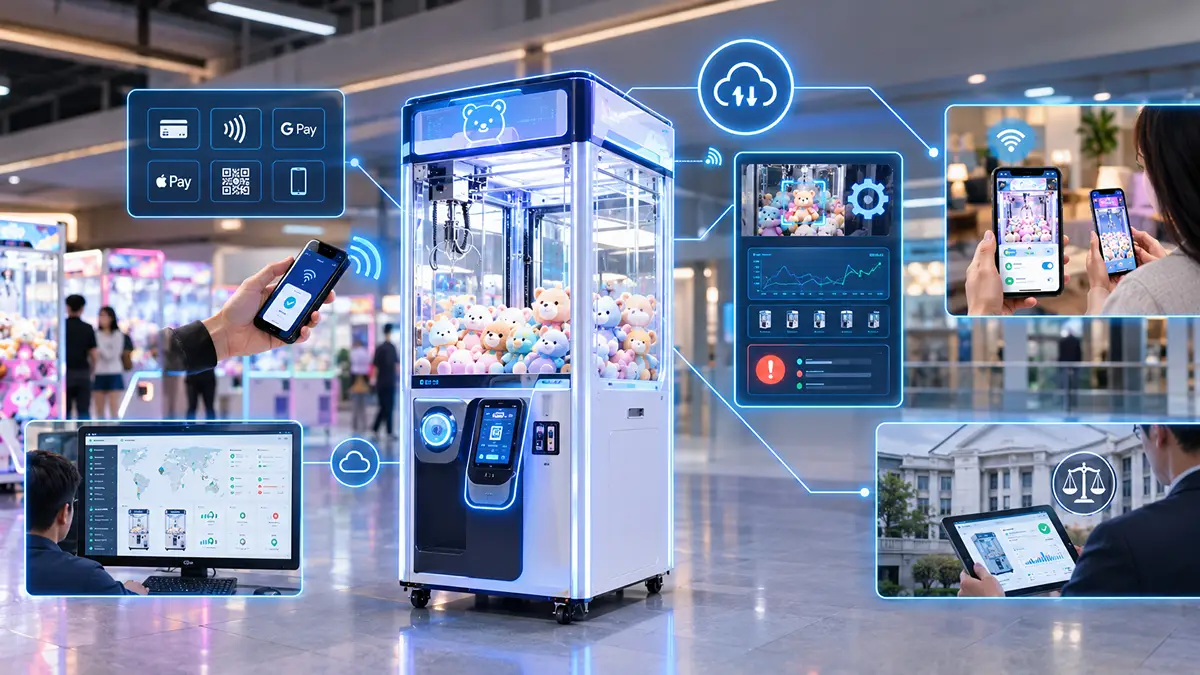
- Pagamento: Coin mechs, token systems, validadores de contas, leitores de cartão, and QR codes that match what your customers carry.
- Physical: Cabinet height, prize bin size, and footprint for rooms with low ceilings or narrow bays.
Distributors use the same levers differently: private-label finishes and region-locked software protect margin where the same machine sits two clicks from a rival.
Spare Parts and Documentation
Machines fail on wear parts, cheap when stocked and expensive when air-freighted in a panic. Ask for the consumables list for your model, the stock position, and the dispatch lead time.
Then ask for exploded diagrams with clear part numbers. Good documentation lets your technician order the right board without a phone call, and turns a two-week stoppage into a two-hour one.
Response Time and Warranty Scope
Warranty length sells units; response speed protects weekends. Ask who answers when a machine dies at 8pm on a Saturday, in which languages, and through what channel. We commit to a 12-hour response with parts support and a named contact.
Read the exclusions too: whether part shipping falls on you, whether labour is covered, and what happens when a third-party technician opens the cabinet. Nosso arcade machine maintenance guide covers the routine that keeps most calls away.
Building Long-Term Partnerships With Arcade Equipment Suppliers
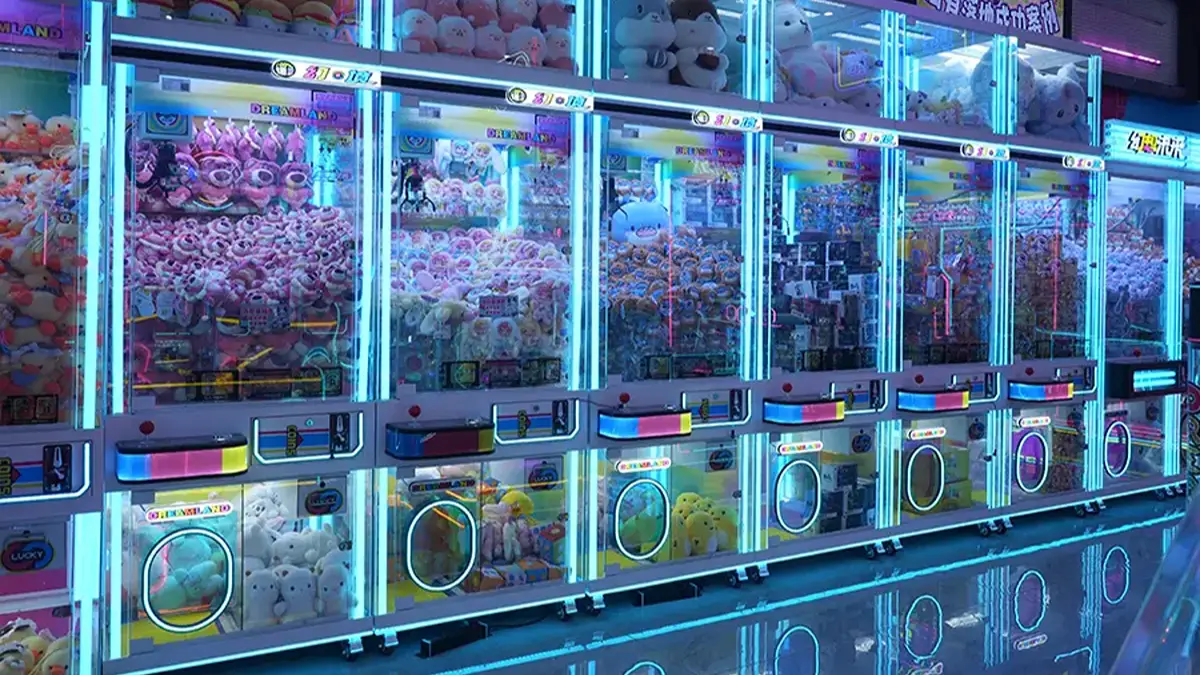
Treat the first order as a test: pilot units, written service levels, and shared forecasts keep a floor running for years.
A supplier relationship either compounds or decays. Operators who keep machines earning move from a transactional purchase to a planned partnership with the same arcade equipment manufacturer, one order at a time.
Start With a Pilot Order
Buy a small sample set of the exact model, not a catalogue sample chosen for you. Run it on your floor for a full trading month and log every fault, coin-mech reject, and support ticket.
That pilot measures hardware and service together. It also settles payment terms on a small number: deposit structure, invoice accuracy, and whether the packing list matched the container.
Put Service Levels in Writing
- Response window: A maximum reply time for technical faults, plus the escalation contact when the first channel is quiet.
- Parts commitment: Which wear parts stay stocked, for how many years after a model retires, and at what dispatch speed.
- Data access: Your right to machine telemetry and payout settings, so a supplier change does not blind your reporting.
A contract with no measurable service target is a receipt. Then share your expansion calendar months ahead, since a factory that pre-stocks your wear parts and reserves a line slot returns the favour with shorter lead times.
Red Flags Worth Walking Away From
- Price far below the market: Cheap cabinets hide uncertified power supplies, thin harnesses, and no service behind the sale.
- Refusal of a live video tour: A real plant walks you through its line at any agreed hour. A trading desk finds reasons to delay.
- Certificate logos without numbers: No verifiable report for your model means no compliance file when an inspector asks.
- Single-source concentration: Keep a tested second supplier for your highest-earning category so one shortage cannot empty your floor.
Perguntas frequentes
What certificates should an arcade equipment manufacturer provide?
Model-specific documents, not company-wide ones. For the EU that means CE marking under the Low Voltage and EMC directives, RoHS paperwork, and an EU-based responsible person. For US venues expect FCC Part 15 Class A, and often a UL or ETL mark against UL 22 where a landlord requires it.
How can I verify a factory before paying a deposit?
Combine three checks. Request test reports whose numbers you can trace to an issuing body. Book a live video walk-through of the line that builds your model. Commission an independent pre-shipment inspection before the balance payment. A supplier with nothing to hide schedules all three inside a week.
What should a manufacturer’s quotation include?
Unit price with the Incoterm stated, the exact model and configuration, and options priced separately. Then packing method and units per container, lead time from deposit, warranty scope and exclusions, and the spare-parts list for that model.
Can I order custom-branded machines from a factory?
Sim, within the limits of the supplier’s engineering depth. Artwork, colours, and lighting are quick changes. Cabinet geometry, payment hardware, and firmware depend on who owns the design files. Send an NDA before your artwork, and confirm in writing who owns the tooling afterwards.
What after-sales support is normal for commercial machines?
A defined response window, remote diagnosis for firmware and settings faults, exploded parts diagrams, and stocked consumables such as claws, buttons, belts, and power boards. Warranty length matters less than those four items, because downtime is what costs you money.
Considerações Finais
Verify paperwork, powered testing, and parts depth before the deposit; every one is checkable from your office.
A lower quote from an unverified supplier is a loan against your own maintenance budget. Certified electrical design, powered testing, and documented parts supply turn a container of cabinets into a revenue line.
Start small and specific: request model-level test reports, book a live factory walk-through, and order a pilot set for a full trading month. Want to see how our line handles that test? Send us your machine mix and floor plan, and we will return a configuration, a packing plan, and a landed-cost breakdown.