Claw machine software decides how a cabinet feels to play and what it earns on the route. The same cabinet can frustrate players and stall, or reward genuine skill and pull repeat plays, purely because of what runs on its control board.
This guide breaks down the control layer inside modern crane machines: grip and payout logic, cashless payment handling, and fleet telemetry. It also compares legacy cabinets with connected ones, so you can judge which upgrades actually change monthly revenue.
What Is Claw Machine Software?
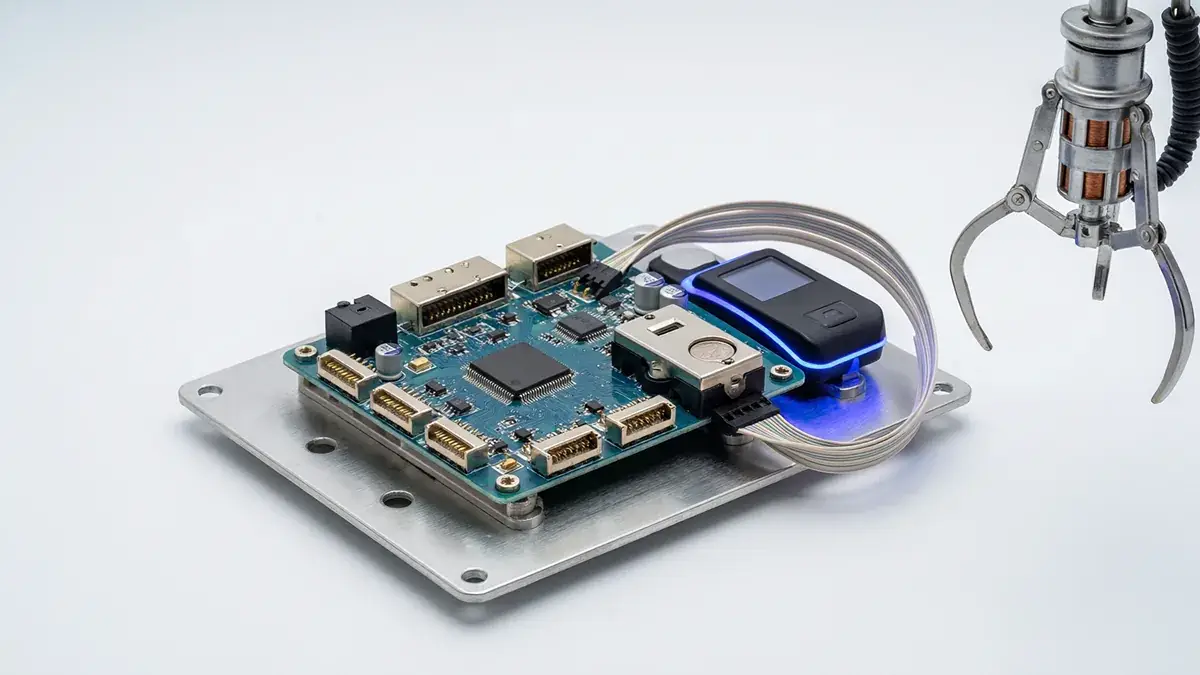
Claw machine software is the embedded program on a crane machine’s control board that coordinates motor movement, payment validation, δύναμη λαβής, and audiovisual feedback through one continuous control loop. Understanding this software layer matters because it bridges player inputs and physical crane movement, and it sets the economic terms of every play.
Core Function and System Architecture
At its core, the firmware runs a state machine. Joystick inputs drive the gantry motors along the X and Y axes. A button press starts descent, the claw closes, the crane lifts, travels to the chute, and releases. Sensor feedback closes each step.
- Sensor Inputs: Limit switches and optical sensors track crane position to prevent mechanical overrun.
- Safety Interlocks: Tilt and door sensors block play when the cabinet is opened or moved.
- Payment Validators: Coin acceptors, bill readers, and card terminals report credits to the processor.
Grip Strength and Payout Algorithms
Difficulty is programmed, not accidental. The software regulates voltage to the claw coil, and operators set the win-rate target the machine works toward.
- Counter-Based Logic: Counts plays since the last win and switches to full voltage once a threshold is reached.
- Turnover-Based Logic: Compares total coin-in against prize cost before enabling a strong grip, protecting a target margin.
- Strength Phases: Separate pickup, transport, and drop profiles shape how each attempt looks and feels to the player.
Operator Menus and Revenue Controls
A password- or key-switch-protected service menu exposes the cabinet’s economics: price per play, grip-force curves, maximum wins per hour, and session timers. The same menu logs total plays, revenue, prize-out counts, and error codes, and on networked cabinets it accepts remote parameter changes and firmware updates.
Multimedia and Connected Features
Software also drives the show. Audio cues, LED animations, and countdown screens synchronize with each game state. In connected deployments, the same control layer validates cashless payments and links the cabinet to companion apps for credits, loyalty, and remote play.
Traditional Claw Machines vs Smart Claw Machines
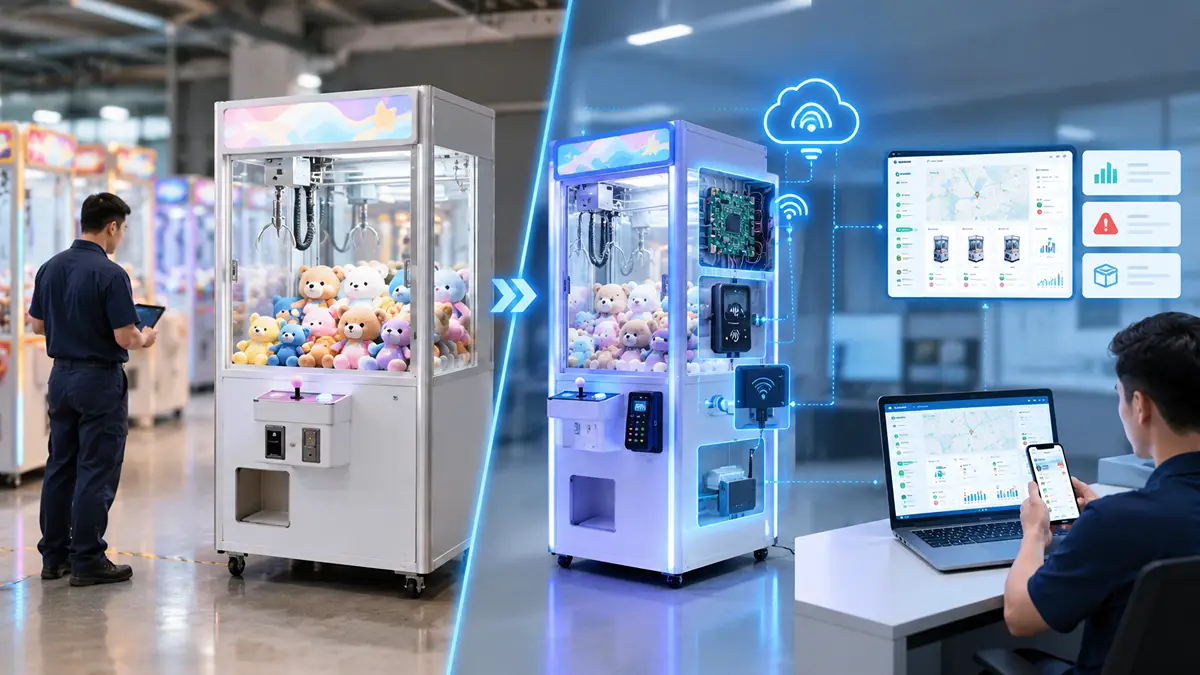
Smart claw machines keep the cabinet mechanics but add networked control boards, cashless payment modules, and telemetry, so operators adjust settings and diagnose faults remotely instead of visiting each site. The structural difference is connectivity. A legacy cabinet runs standalone logic with no view of your route. A connected cabinet reports earnings, errors, and stock levels to one dashboard.
Control Boards and Network Connectivity
Legacy machines rely on DIP switches, analog relays, or standalone control boards with zero external connectivity. Settings change only when someone opens the coin door. Smart units add Wi-Fi, Ethernet, or cellular modules, and push configuration changes over the air instead of swapping chips on site.
Cashless Payment and Pricing Flexibility
Coin-only cabinets lose impulse plays from players who carry no cash, and collection runs cost labor on every route stop. Smart cabinets accept cards, mobile wallets, and QR codes through PCI-compliant payment processors, and pricing per play becomes a remote setting rather than a physical adjustment.
Grip Control and Payout Audit Trails
Analog machines hold grip behavior with fixed voltage regulators, so wear shifts difficulty without warning. Software-driven control profiles coil voltage per phase and logs payout outcomes, giving each machine a digital record you can check against how it actually played.
Fleet Maintenance and Downtime Response
On traditional cabinets, a fault stays hidden until a technician finds it during a collection run. Connected units stream alerts for motor overcurrent, blocked sensors, or empty prize bins, so the repair trip happens once, scheduled, instead of twice by accident.
Route Economics and Decision Making
The commercial gap is measurement. Connected fleets show which locations earn, which stall, and why. Relocation and prize-mix decisions stop being guesses, and the location math behind them decides how far payout tuning can actually take a cabinet.
Maximize Profits With Factory-Direct Claw Machines
How Software Improves Player Experience
Software turns inconsistent electromechanical behavior into stable, fair, and responsive gameplay, which is what keeps players stepping up a second and third time. When a player guides the claw toward a prize, they expect a test of skill, not a coin flip against worn hardware. Good claw machine software makes every attempt behave predictably, so wins feel earned and losses feel correctable.
Dynamic Difficulty and Payout Balancing
Older cabinets set difficulty with spring tension and fixed voltage, and the setting drifts as parts wear. Programmatic control sets a win-rate target and holds it through the counter and turnover logic described above. Some implementations also ease difficulty after long losing streaks to protect retention. There is no single correct payout number: the right target balances prize cost, foot traffic, and player patience, which is why calibration matters more than any preset. Choosing cabinets whose logic you can actually tune is one of the core criteria in our guide to choosing commercial claw machines.
Motion Control and Mechanical Stability
A jerky gantry or a swinging claw signals a cheap or rigged machine, and players read it instantly. Software-driven motion profiles ramp motor speed to suppress overshoot, and alignment checks repeat on every cycle. When movement is stable, players blame their own timing for a miss instead of the cabinet, and they try again.
Hardware quality still sets the ceiling here. Clean linear rails, a balanced claw assembly, and a stable turntable give the firmware something consistent to control; worn parts force constant compensation. That is why board-level software claims only mean something after you inspect the build itself, component by component.
Interface Feedback and Reward Delivery
Lighting and sound that fire on credit, grab, and drop make the game state legible at a glance. Touchscreen prize catalogs let players see what is actually inside before paying. Instant physical dispensing removes the ticket-line wait, and digital credits or loyalty balances keep the reward loop alive between visits.
App-Connected and Remote Play
Low-latency video and control links now let players operate a real cabinet from a phone, with won prizes shipped or collected on site. Remote play extends demand past the venue’s opening hours and its foot traffic. If you evaluate these models, weigh latency, fee structure, and prize logistics before treating app play as automatic upside.
How Operators Benefit From Smart Control Systems
Smart control systems cut labor per machine, shrink downtime, and make payout behavior measurable, so route decisions rest on data instead of memory.
For operators, the software layer pays back in three currencies: collected labor hours, recovered uptime, and margin controlled per cabinet.
| Operational Pillar | Traditional Method | Smart Control Impact |
|---|---|---|
| Revenue Management | Fixed pricing, earnings tracked by hand | Remote price per play, automated payout control |
| Gameplay Calibration | Manual potentiometer or DIP tweaks per visit | Payout targets pushed from a dashboard |
| Fleet Maintenance | Faults found on site during collection | Telemetry alerts before the next dispatch |
| Inventory Allocation | Visual bin checks, anecdotal reorder calls | Prize-out data aligned with replenishment |
Payout Control and Pricing Levers
Automated payout logic ties strength phases to coin-in, so each cabinet holds its margin without a technician on site. Price per play, win caps, and promotional windows become remote adjustments. TKY’s payment and management systems cover this cashless-plus-telemetry stack as a factory-configured option on our cabinets.
Labor Savings and Remote Diagnostics
Dispatching a technician is the largest recurring cost in route operations. Dashboards replace routine inspection stops with exception handling: visits happen when an alert says they will pay off. Standardizing settings across a fleet also simplifies staff training and service checks, alongside the hardware care covered in our arcade machine maintenance guide.
Telemetry-Guided Prize and Stock Decisions
Merchandise is capital parked inside a cabinet. Prize-out counts per location show which items drive attempts and which sit untouched, so replenishment follows demand instead of a technician’s visual guess. Rotation strategy then does the rest, and the weight, size, and tier logic behind it is laid out in our guide to building a claw machine prize mix.
Player Retention as Recurring Revenue
Stable grip behavior and legible game states reduce the perception of a rigged cabinet. Repeat plays from a trusted machine beat one-off spends from a suspicious one. Loyalty credits and session history give you a direct handle on return visits. Per-location revenue ceilings decide the rest. Profit math varies as much by venue type as by machine settings, so verify a route’s earning profile before scaling cabinets into it.
Future Development of Claw Machine Technology

The next stage is connected cabinets that tune themselves, accept every payment format, and reach players outside the venue, while regulators take closer interest in payout fairness.
Adaptive Algorithms and Payout Fairness
Expect difficulty logic that adapts to local traffic and prize weight instead of running one static profile. Adaptive tuning protects margin and player experience together, but only where operators hold real control over the targets. Regulators and players both scrutinize hidden automation more closely. Transparent, adjustable payout settings are becoming a purchasing criterion. The legal side is covered in our guide to claw machines legal απαιτήσεις.
Hardware Standards for Connected Cabinets
Networked machines widen the prize field: more payment formats, more data, more firmware surface. CPSC toy safety requirements already govern children’s prizes, and connected cabinets add payment-data obligations on top of electrical and mechanical certification. Factories that pre-integrate compliant hardware save operators from retrofitting it later.
App Play and Multi-Location Networks
Companion apps tie cabinets into one account network, with play history, credits, and promotions that follow the player across locations. For operators, unified reporting across a fleet sharpens every relocation and prize-sourcing decision. The winners in this model will be venues that pair physical traffic with digital retention rather than treating the app as a novelty.
Συχνές Ερωτήσεις
What does claw machine software do?
Claw machine software runs the entire game cycle. It translates joystick inputs into motor commands, manages sensor feedback, validates coin or digital payments, and decides when the claw grips at full or reduced strength. In connected cabinets it also streams performance data to operator dashboards.
How does claw machine software work?
The software executes a continuous control loop. Inserted credits start a timed session, joystick movements drive the X and Y axis motors, and a button press guides the claw’s descent, grip, lift, chute travel, and release. Throughout the cycle the firmware modulates coil voltage to set grip strength.
Can claw machine settings be adjusted?
Ναί, through a protected service menu on the control board or, on connected models, from a remote dashboard. Adjustable parameters typically include pickup strength, transport retention force, bonus strength, play cost, session duration, and win caps. Modern systems also accept a target win ratio the machine maintains automatically.
How does claw strength control work?
Strength comes from the voltage sent to the claw’s electromagnetic coil. Higher voltage means a tighter grip; lower voltage weakens the hold. Software applies separate pickup and transport profiles, and in payout-controlled setups full holding power activates only on qualifying plays set by the payout logic.
What is a smart claw machine?
A smart claw machine is a connected arcade unit with networked sensors and software that goes beyond standalone electromechanical control. It supports cashless payments, sends live telemetry and fault alerts to the cloud, and lets operators recalibrate settings remotely instead of opening the cabinet on site.
Can claw machine software improve arcade revenue?
Ναί, mainly by cutting losses. Cashless integration removes the no-cash walkaway, telemetry surfaces faults before they cost weekend traffic, and payout control holds margin per cabinet. Revenue still depends on location quality and prize mix; software makes those variables measurable rather than magically higher.
Τελικές Σκέψεις
Hardware draws the play; software decides whether it repeats and whether the margin holds. Before your next purchase, check which grip profiles, payout targets, payment formats, and telemetry a cabinet actually exposes. Locked-down control boards turn a smart machine into a dumb one with a logo.
Every TKY cabinet ships with configurable payout logic and optional cashless and fleet-management modules. We build them in our 5,000 m² Guangzhou facility, as a CE, FCC, and RoHS certified manufacturer since 2008. Request our latest catalog to compare control-board options per model, or talk with our engineers about custom software profiles for your route.